
This homemade herbal antibiotic ointment is probably not quite as potent as commercially purchased products, but it will still soothe irritations while encouraging wounds to heal using all natural ingredients. Great for chapped, dry hands and feet, scrapes and cuts, this ointment is wonderful to have on hand to reach for in times of need.
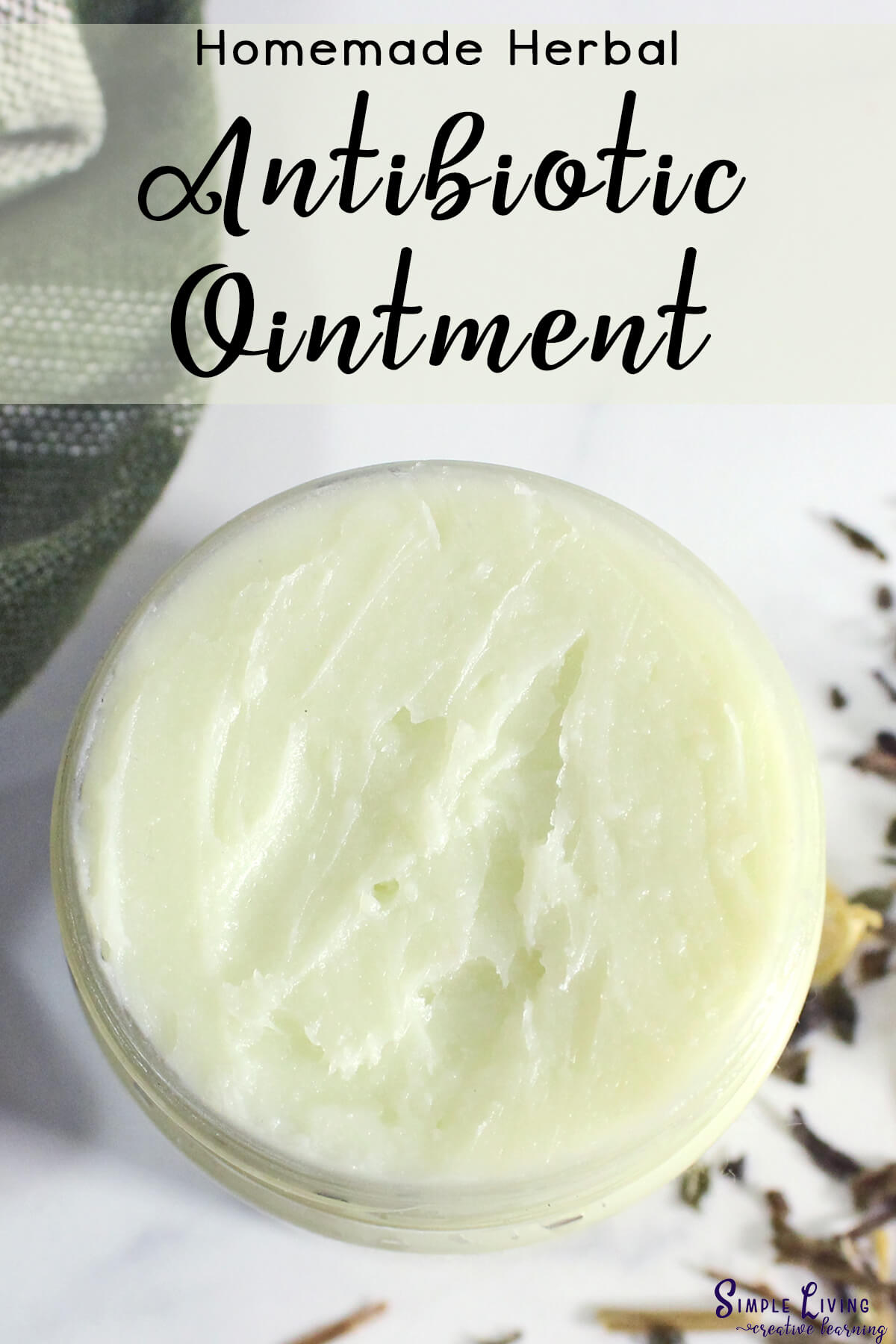
Homemade Herbal Antibiotic Ointment
This homemade Neosporin ointment is made using home-grown or purchased herbs to create a soothing antibiotic ointment at home.
Other herb options that you could use include – though do research any allergies or reactions that these could cause:
- Yarrow
- Chamomile
- Bee Balm or Bergamot
- Thyme
Essential oils that could be used in this ointment include:
- Lavender
- Tea Tree
- Lemon – Steam-distilled – research phototoxic essential oils
Before Using this Ointment
Before using this rub, you will need to understand a few things.
- Test on small area of skin before using. If there’s any irritation, dilute with more carrier oils.
- Wash hands well after using.
Using Herbal Antibiotic Ointment
To use this ointment:
- Carefully clean the area around the wound
- Apply a small amount of the ointment to the affected area
- If needed, cover with a bandaid or bandage
- Use on minor cuts, scrapes or bruise, avoiding deep puncture wounds
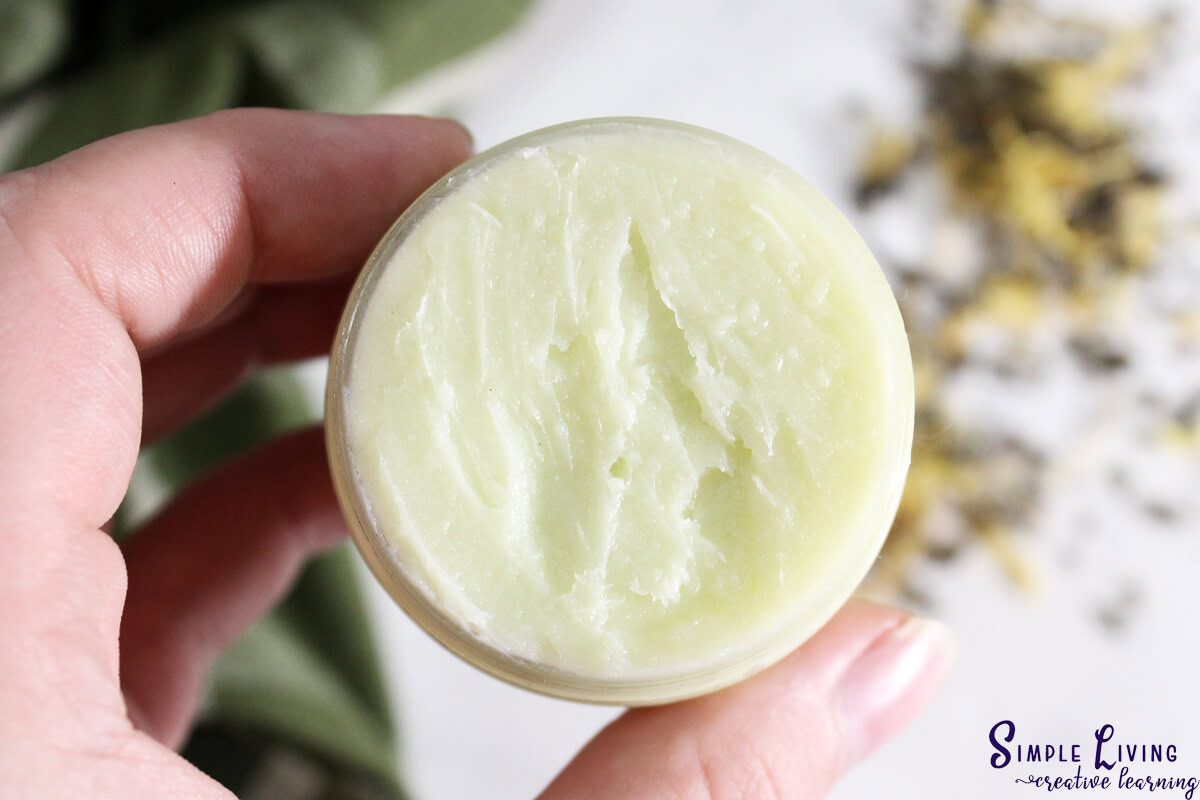
Carrier Oils
When making a salve, choosing the correct carrier oil can improve the impact of the salve as each carrier oil has its own set of distinct properties. Blending a couple of carrier oils can also help maximise their benefits.
With this salve recipe, there are multiple carrier oils that could be used including:
- Avocado Oil
- Sweet Almond Oil
- Argan Oil
- Rosehip Oil
- Hemp Oil
- Safflower Oil
You can learn more about carrier oils here.
Essential Oils
Essential oils are potent, and need to be diluted. As this ointment is being used on your skin, you will need to use essential oils that are gentle enough to be applied to your skin – and used in the correct quantities.
Just be careful using some essential oils such as tea tree and peppermint, around children and pregnant women, making sure to do your research before using.
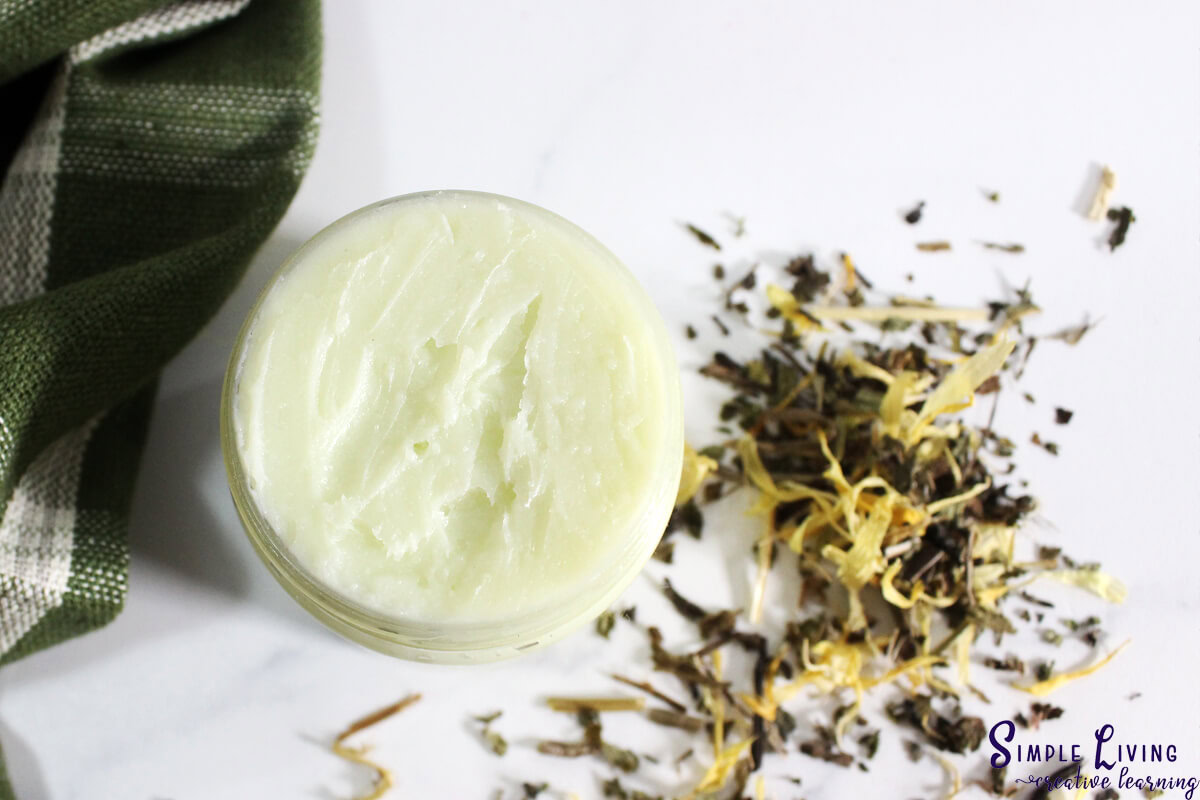
More Resources
- Plantain Salve
- Homemade Calendula Oil
- Rosemary Salve
- Homemade Vapour Rub
- 35+ Self Care Products to Make
- Make Healing Calendula Salve
- What are Carrier Oils and How do you use them?
- Essential Oil Binder
- Magnesium Body Lotion
- Cracked Foot & Heel Balm
- Herbal Muscle Salve
- Rose Salve
- Sore Muscle Salve
- Comfrey Salve
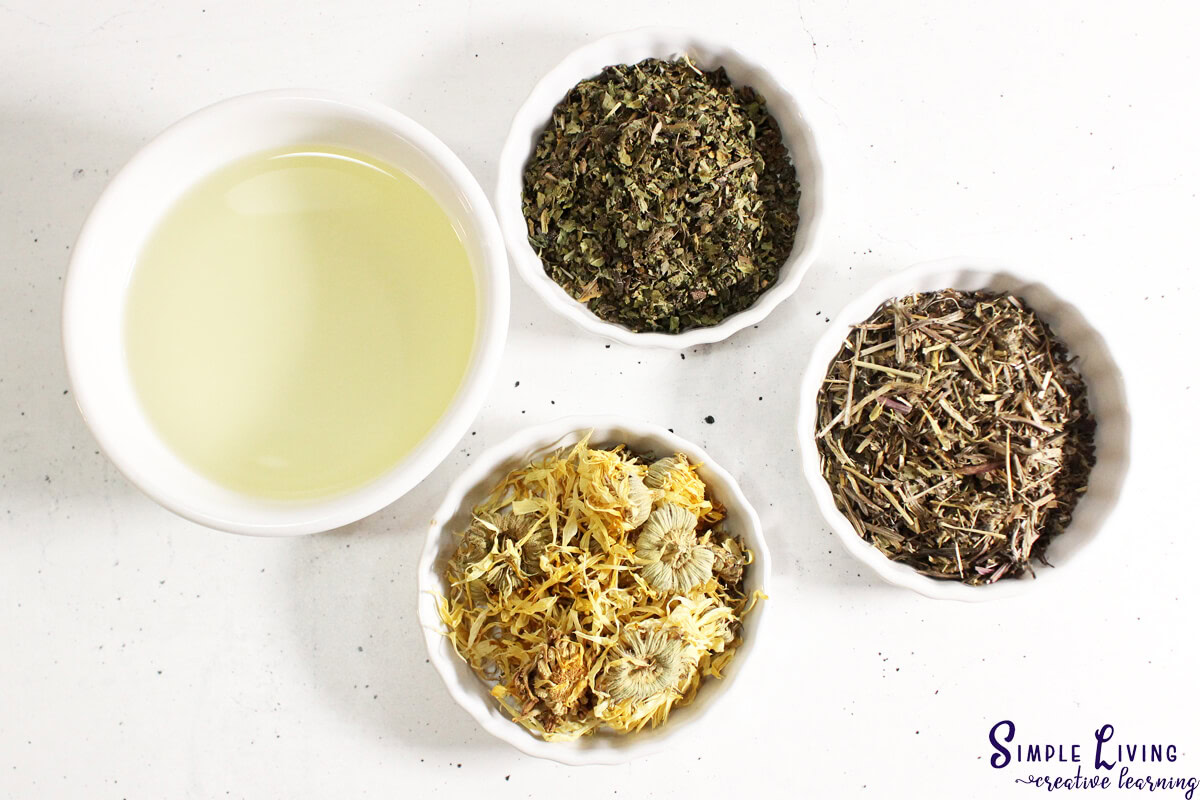
Ingredients for Making Herbal Antibiotic Infused Oil
To make the infused oil:
- Plantain leaves – Plantain is known for drawing toxins out of the body. As it coaxes the poisons out, it also helps alleviate the itching and burning sensations that come with these types of injuries.
- Comfrey – Powerful for healing.
- Calendula – Calendula is best known for its healing properties, with its high oleanolic acid content, it also has anti-bacterial and antioxidant properties.
- Carrier Oil
Important Comfrey Notes
It is not advised to use comfrey salve on deep, open wounds and wounds that need stitches. It is so powerful that it can stimulate healing on the outside, and in doing so, trap bacteria and other microorganisms inside which can lead to abscesses and/or infections.
There is also a lot of information around regarding taking comfrey internally. In the past comfrey was used internally, though now this is not recommended as it can potentially cause damage to your liver.
There is a lot of discussion around this plant, and the safest ways to use it, so before using, please do your research.
In some trials, there has been reports of a small amount of people having skin reactions to comfrey. As with everything, there is always the possibility of an allergy, so complete a small patch test before using for the first time.
Infused Oil
Before making this ointment, you will need to make a herb infused oil. After the infusion period has ended, this oil is then mixed with beeswax to make an ointment.
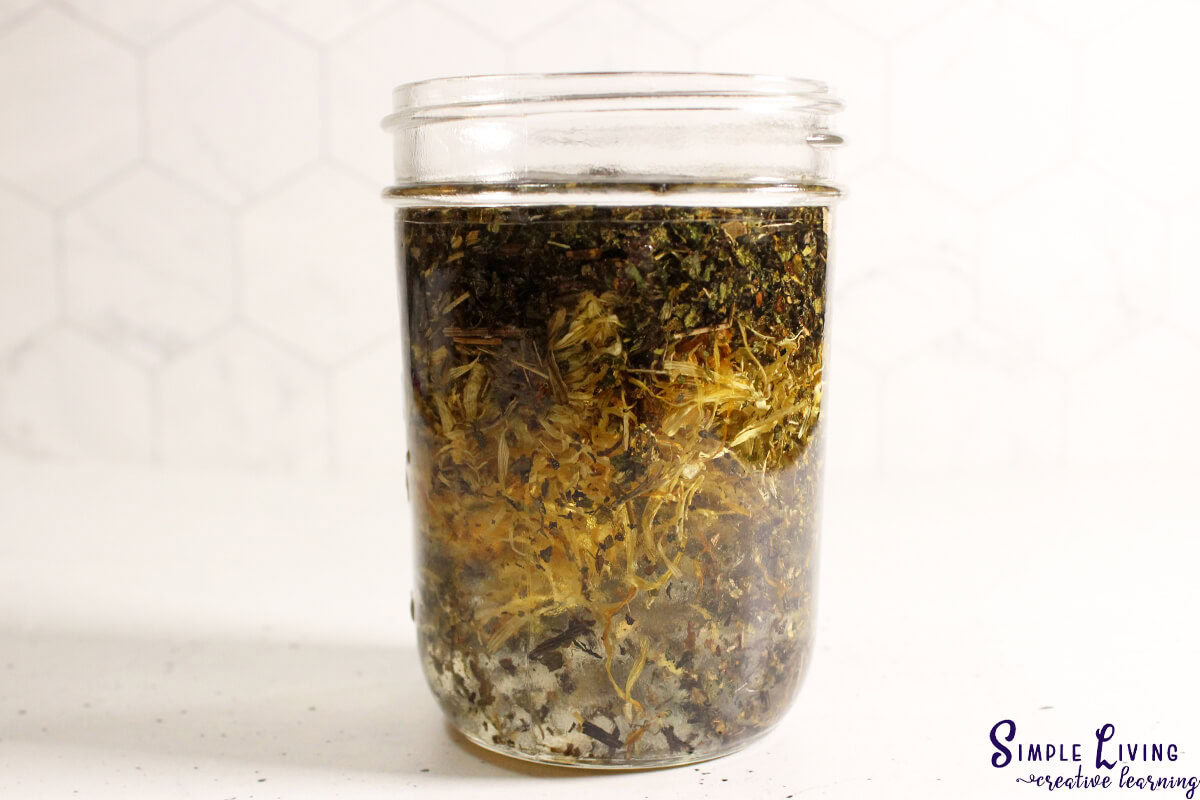
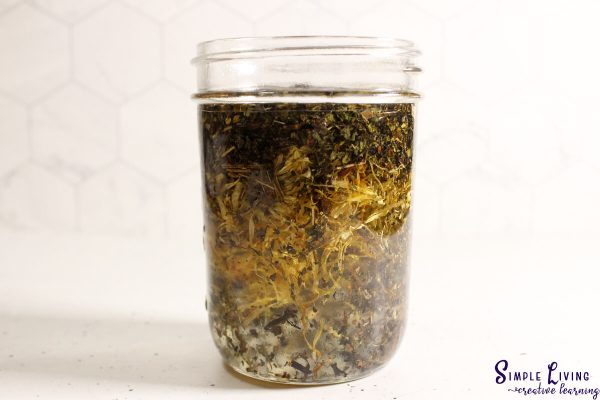
To do this, fill a glass jar half full with dried plantain and comfrey leaves and calendula flowers.
Pour over the avocado oil (or other carrier oil) until the jar is completely full, making sure that all the leaves and flowers are fully covered.
Add the lid to the jar and keep in a cool, dark area.
Infuse for 4 – 6 weeks, shaking every now and then when you walk past. Shaking is not absolutely necessary, so if you forgot, don’t stress about it. Infusing oils can also be done in a crockpot on the warm setting or on the stove.
Once you have the infused oil, strain out the herbs using a cheesecloth and pour the oil into a clean, glass jar. The herbs that are leftover can be added to your compost bin.
Making Herbal Antibiotic Ointment
To make the ointment, you will need:
- 1 Cup Infused Oil
- 8 TBSP Beeswax
- 15 drops Essential Oil – Optional
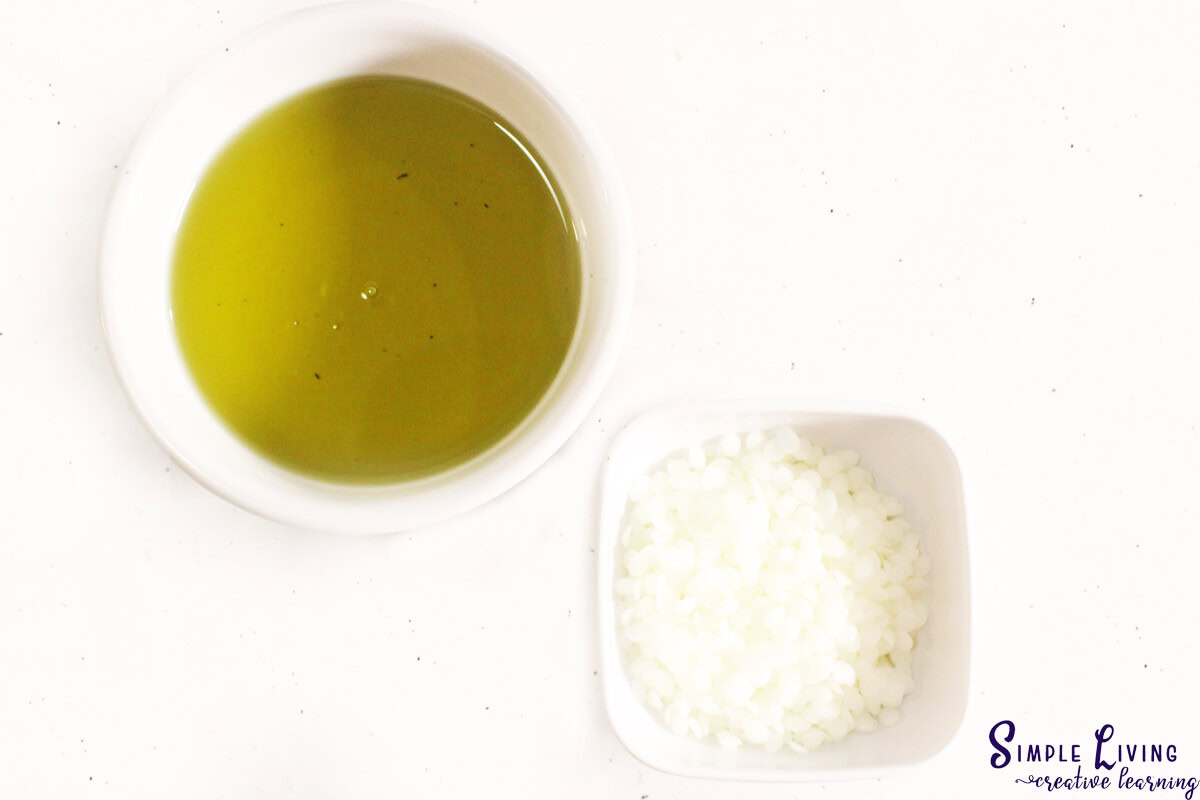
TIP – When using beeswax in your products, just note that it does harden very quickly as it cools. This means that it can be quite difficult to remove from the dishes and cutlery that is used. For this reason, I have dedicated bowls and cutlery that is only used for making homemade products, especially ones that contain beeswax.
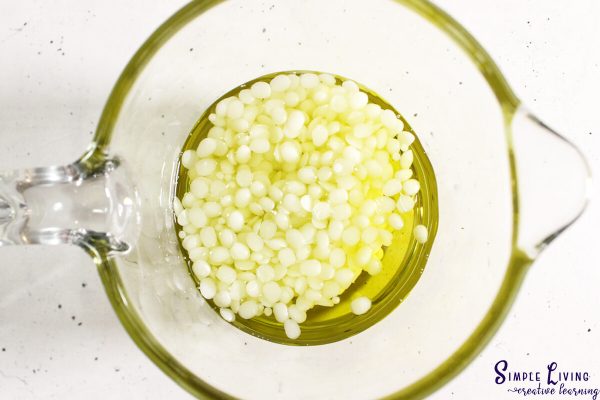
Combine the beeswax and the infused oil in a microwaveable container and heat for 30 seconds at a time in the microwave until the beeswax is completely melted. Stir in between each heat burst.
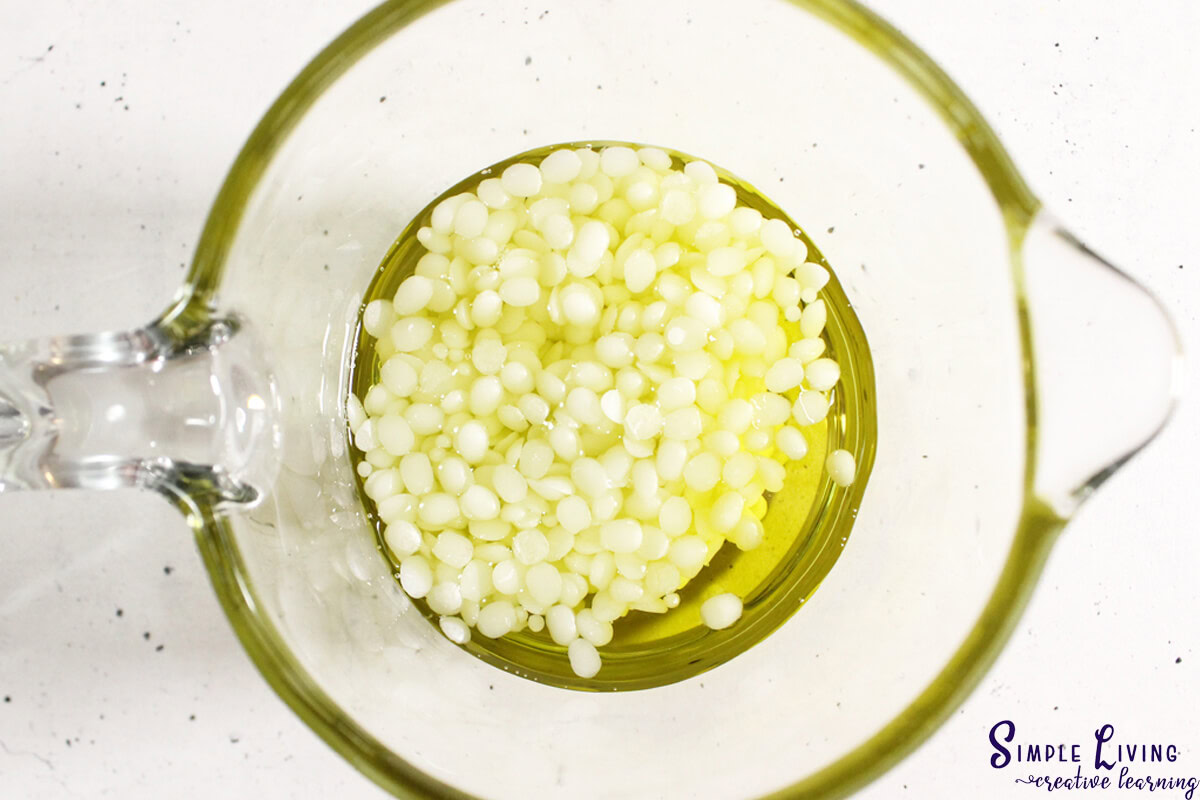
This process could also be done in a double boiler.
Let it cool slightly before adding the essential oil if using and mix through.
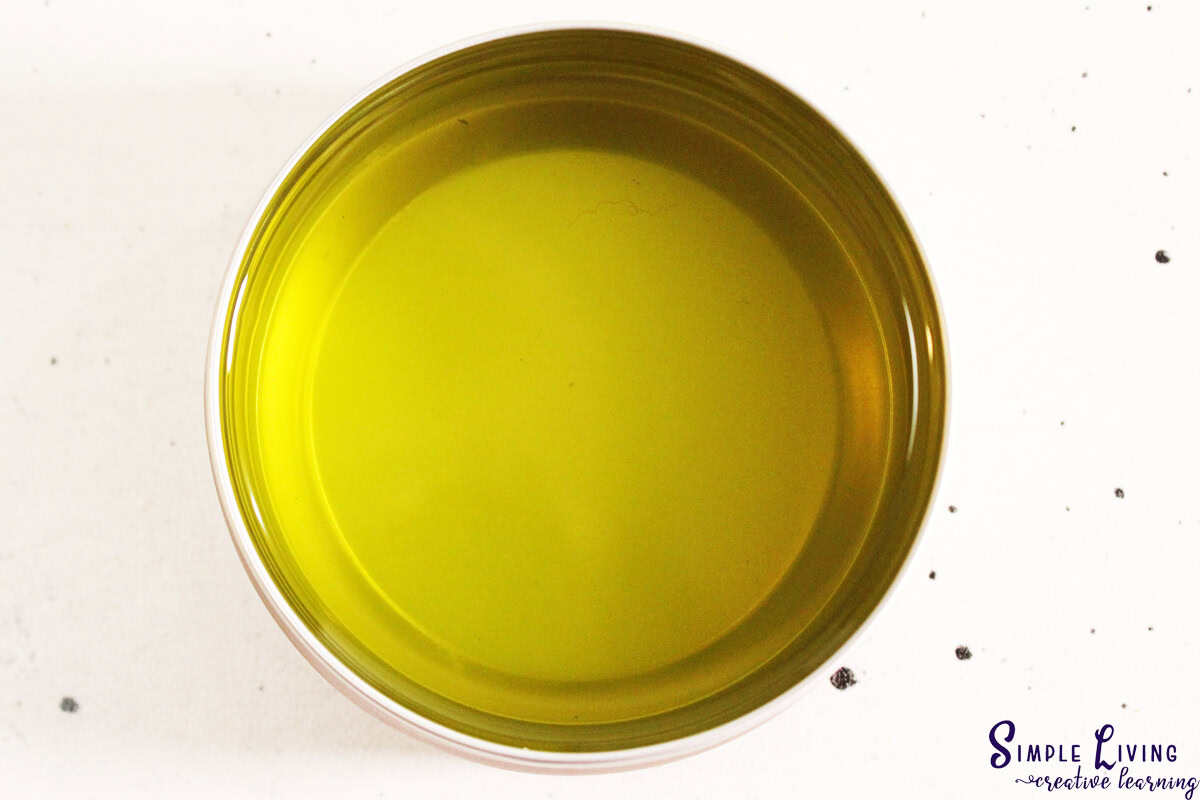
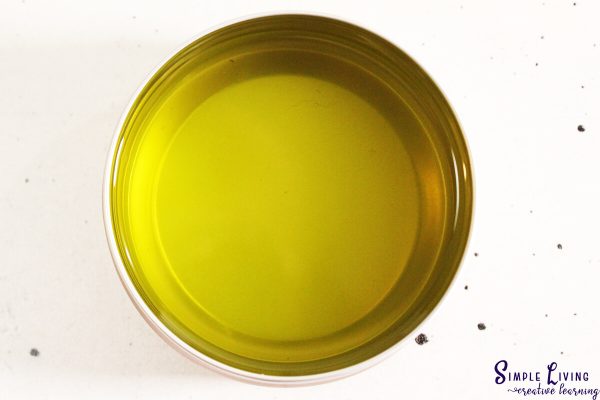
Pour the mixture into small glass jars or tins.
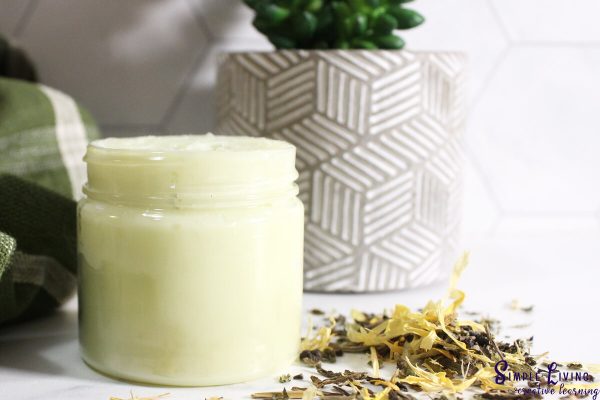
Let the ointment cool and set.
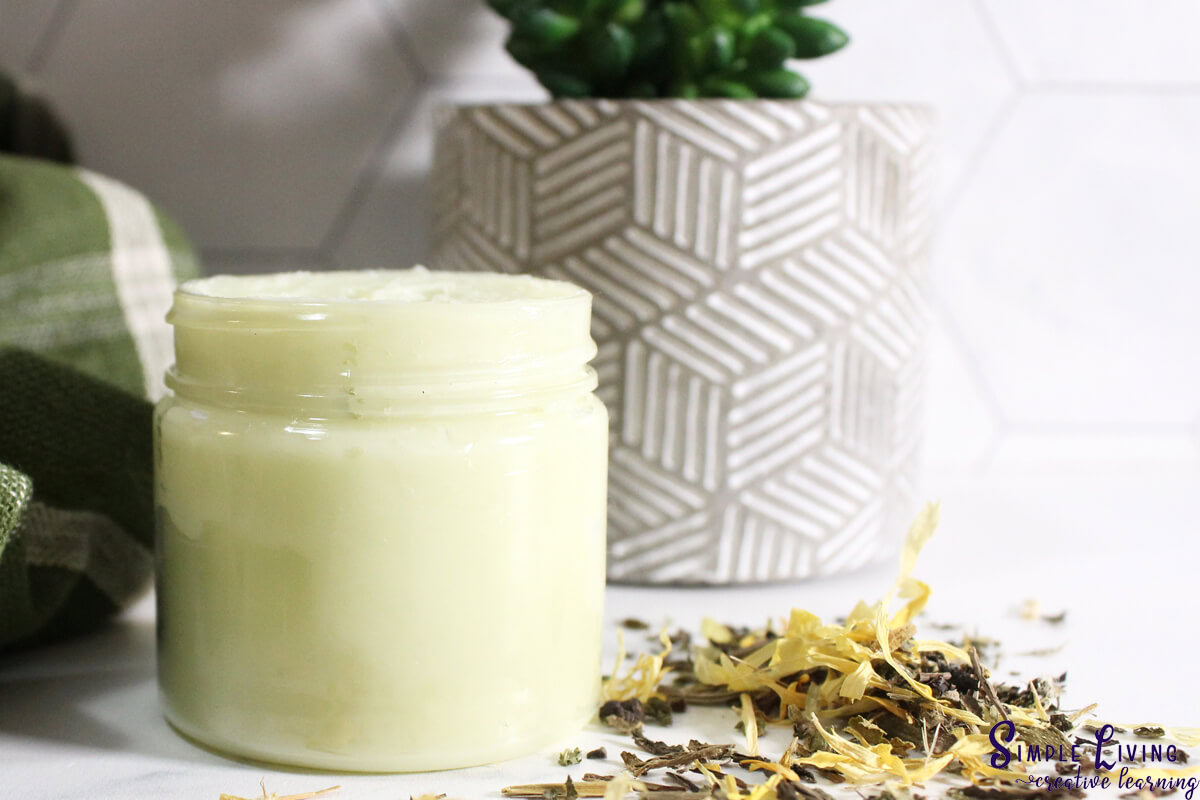
The ointment is now ready to label, date and store.
Storing This Ointment
Place the salve in dark glass jars or metal tins to protect it from exposure to light and air. I have also used tubes for easier application.
Store in a cool, dark place.
When properly stored, this salve should last up to six to twelve months.
Notes
- If you are picking fresh flowers to use in this salve, make sure to harvest them from a pesticide free area.
- Harvest only when you are 100% positive you have the correct plant as there are many lookalikes which are inedible or poisonous.
- Vitamin E is optional, and is often added to salves as an antioxidant to prevent rancidity, as well as for its amazing skin-healing properties. Add 1 teaspoon of vitamin E oil to help preserve your salve even longer!
- You can use any type of carrier oil for the infused oil. This recipe uses avocado oil.
- If you want this to be a vegan recipe, swap out beeswax pellets for candelilla wax.
- I live in a hot climate, so this is made with more beeswax to stop it from melting during hot summers, thus making this a harder ointment. Use less beeswax if you want a softer ointment. To test the consistency of the salve, place a small amount on the back of your hand and see what it does. If it’s too soft, add more beeswax; if it is too hard, add more oil.
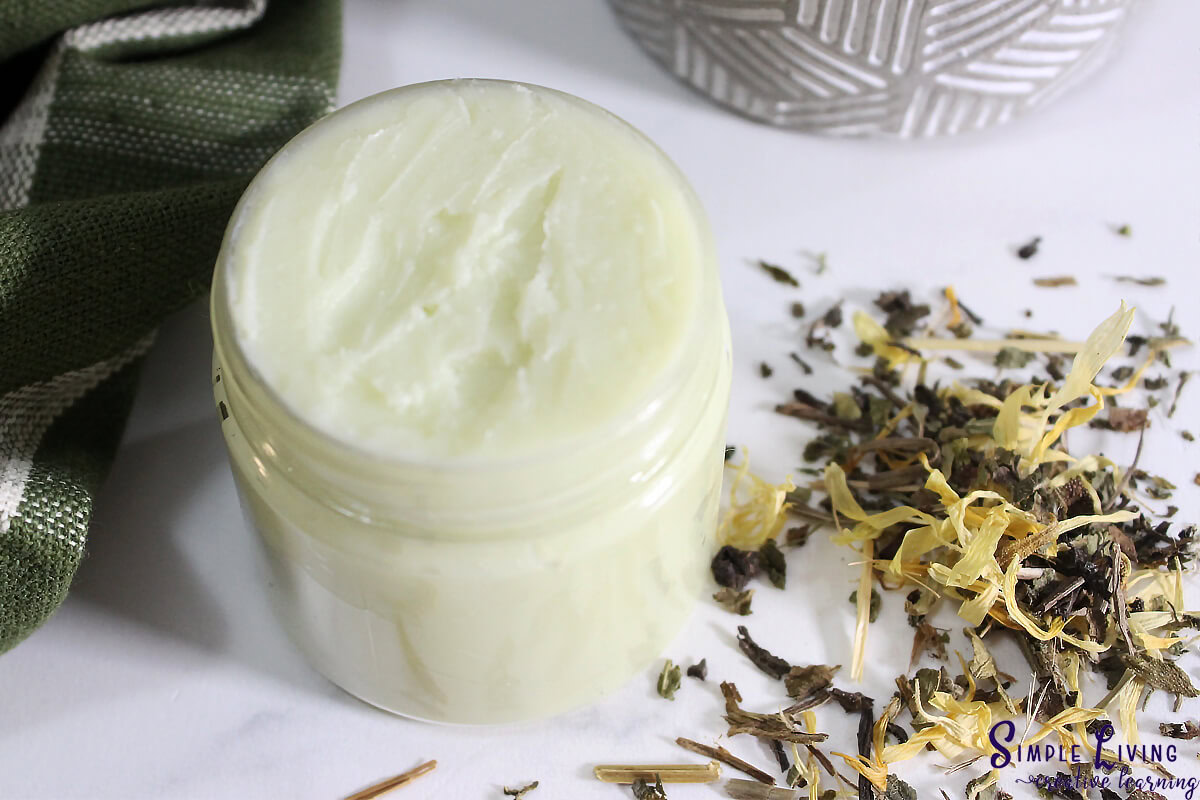
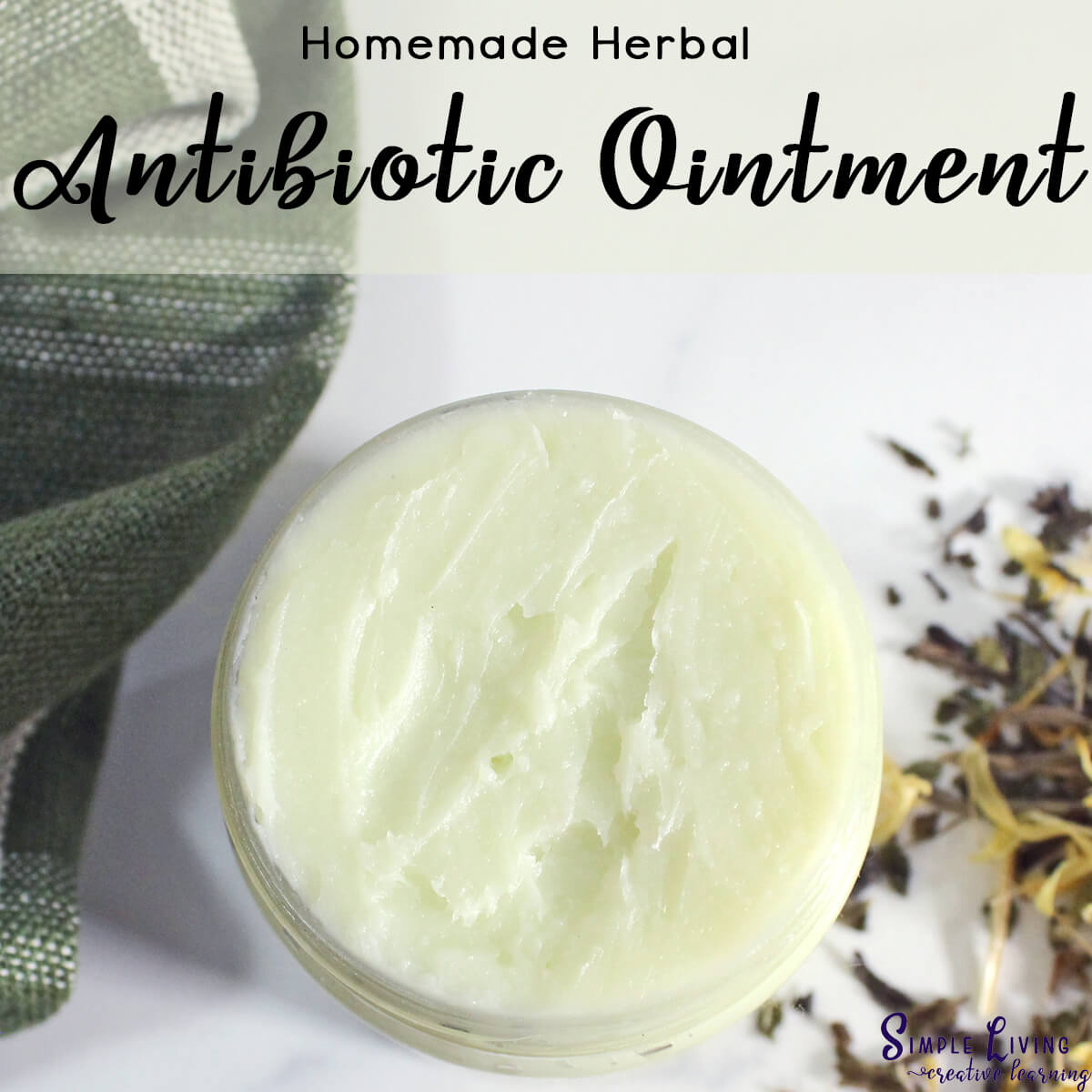
Homemade Herbal Antibiotic Ointment
Ingredients
Infused Oil
- Plantain Leaves Dried
- Comfrey Leaves Dried
- Calendula Flowers Dried
- Carrier Oil Such as Avocado Oil, Sweet Almond Oil, Jojoba Oil, Coconut Oil
Antibiotic Ointment
- 1 Cup Infused Oil
- 8 TBSP Beeswax
- 15 Drops Essential Oils Optional
Instructions
Infused Oil
- Fill a glass jar half full with dried plantain and comfrey leaves and calendula flowers.
- Pour over the avocado oil (or other carrier oil) until the jar is completely full, making sure that all the leaves and flowers are fully covered.

- Add the lid to the jar and keep in a cool, dark area.
- Infuse for 4 – 6 weeks, shaking every now and then when you walk past. Shaking is not absolutely necessary, so if you forgot, don’t stress about it. Infusing oils can also be done in a crockpot on the warm setting or on the stove.
- Once you have the infused oil, strain out the herbs using a cheesecloth and pour the oil into a clean, glass jar. The herbs that are leftover can be added to your compost bin.
Herbal Antibiotic Ointment
- TIP – When using beeswax in your products, just note that it does harden very quickly as it cools. This means that it can be quite difficult to remove from the dishes and cutlery that is used. For this reason, I have dedicated bowls and cutlery that is only used for making homemade products, especially ones that contain beeswax.
- Combine the beeswax and the infused oil in a microwaveable container and heat for 30 seconds at a time in the microwave until the beeswax is completely melted. Stir in between each heat burst.This process could also be done in a double boiler.
- Let it cool slightly before adding the essential oil if using and mix through.
- Pour the mixture into small glass jars or tins.
- Let the ointment cool and set.
- The ointment is now ready to label, date and store.
Notes
Important Comfrey Notes
It is not advised to use comfrey salve on deep, open wounds and wounds that need stitches. It is so powerful that it can stimulate healing on the outside, and in doing so, trap bacteria and other microorganisms inside which can lead to abscesses and/or infections. There is also a lot of information around regarding taking comfrey internally. In the past comfrey was used internally, though now this is not recommended as it can potentially cause damage to your liver. There is a lot of discussion around this plant, and the safest ways to use it, so before using, please do your research. In some trials, there has been reports of a small amount of people having skin reactions to comfrey. As with everything, there is always the possibility of an allergy, so complete a small patch test before using for the first time.Disclaimer: These statements have not been evaluated by the Food & Drug Administration. The information on this site is not intended or implied to be a substitute for professional medical advice, diagnosis or treatment. Never disregard professional medical advice or delay seeking medical treatment because of something you have read on this website.
 How to Rehydrate Dried Sourdough Starter