

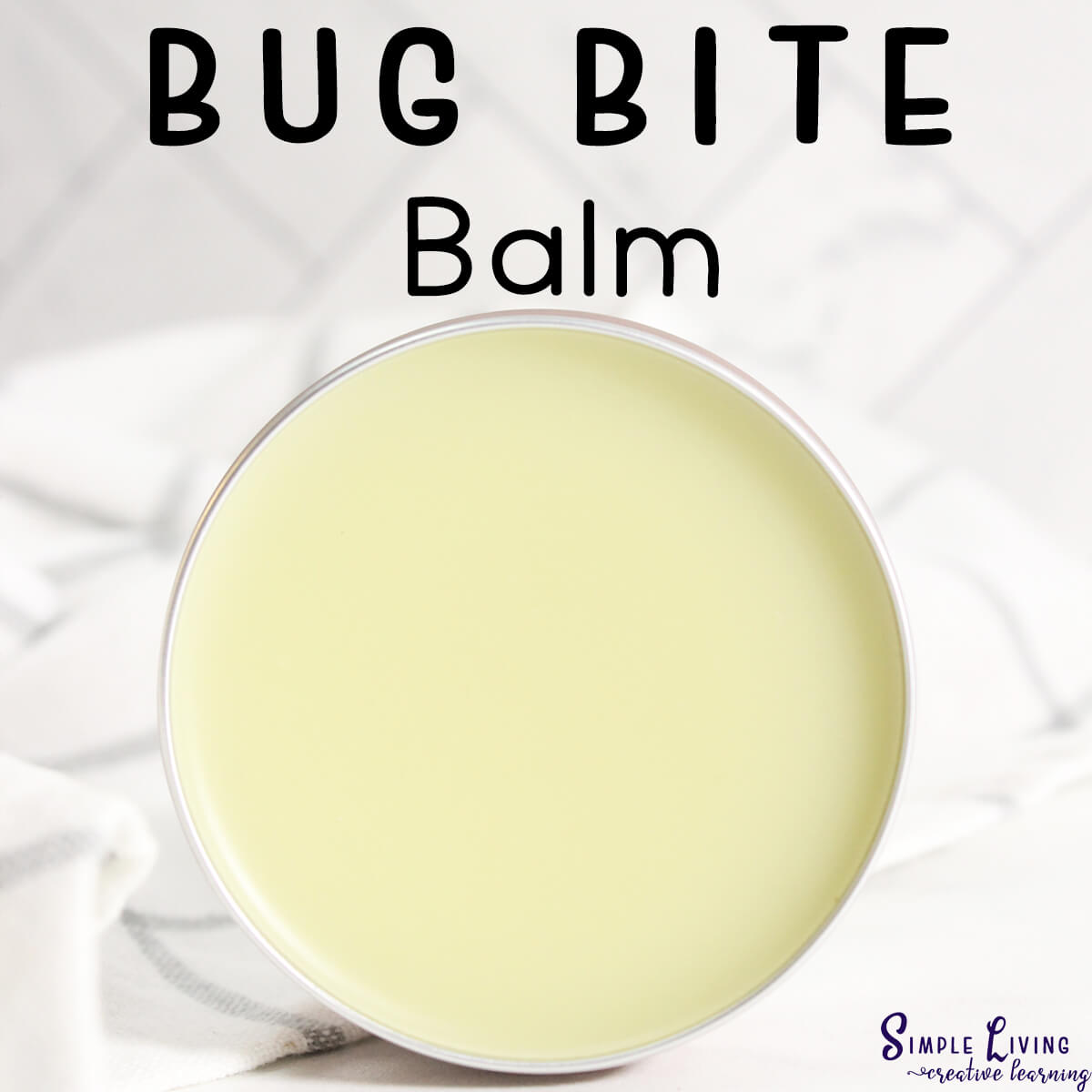
When bug bites cause itching and discomfort, this homemade soothing bug bite balm can provide relief. Easy to make, this bug bite salve can be applied directly to the bites to help reduce the pain and discomfort, while promoting healing.

Soothing Bug Bite Balm
This heavy duty DIY natural bug repellent balm is great for those times when you need a powerful bug repellent that works! But, sometimes you forget to put the bug repellent on or you don’t have it close by and the bugs start attacking.
These are the times that you need this soothing bug bite balm!
The plantain in this balm is known to assist the body with healing wounds. Plantain is also known for drawing toxins out of the body. As it coaxes the poisons out, it also helps alleviate the itching and burning sensations that come with these types of injuries.
Calendula is best known for its healing properties, with its high oleanolic acid content, it also has anti-bacterial and antioxidant properties.
Known for its instant cooling relief, chickweed is a low growing plant that can form a thick mat across the ground. Chickweed in this balm can help with soothing and calming irritated skin.
Carrier Oils
When making a salve, choosing the correct carrier oil can improve the impact of the salve as each carrier oil has its own set of distinct properties. Blending a couple of carrier oils can also help maximise their benefits.
With this salve recipe, there are multiple carrier oils that could be used including:
- Avocado Oil
- Sweet Almond Oil
- Argan Oil
- Rosehip Oil
- Hemp Oil
- Safflower Oil
You can learn more about carrier oils here.

Before Using this Balm
Before using this rub, you will need to understand a few things.
- Don’t use on skin with open wounds or cuts.
- Test on small area of skin before using. If there’s any irritation, dilute with more carrier oils.
- Wash hands well after using.
- Essential oils are potent, and need to be diluted. As this rub is being used on your body, you will need to use essential oils that are gentle enough to be applied to your skin – and use in the correct quantities. Be careful to avoid sensitive areas like your eyes.
- Be mindful of who will be using the salve when adding essential oils as some people can’t use some oils and some oils can’t be used on young children or pregnant and breastfeeding mothers. Some essential oils should not be used on children under 10. Do your research before adding and using any essential oils!
More Salve Recipes
- Make Healing Calendula Salve
- DIY Sore Muscle Rub
- DIY Rose Salve
- Herbal Muscle Salve
- Charcoal Drawing Salve
- Rosemary Salve
- Comfrey Salve
- Violet Leaf Salve
- Plantain Salve
Bug Bite Salve Notes
- I live in a hot climate, so this is made with extra beeswax to stop it from melting during hot summers, thus making this a harder salve. You may want to decrease the beeswax to only 2 ounces (56 g) if you live in a cooler climate. You can test the consistency of your salve by placing a small amount of mixture into the freezer for 2 minutes. Then take it out and let it come to room temperature before testing its hardness. If it is too soft, add a little more beeswax, if too hard, add a little more oil.
- You can substitute carnauba wax for beeswax, though it is harder than beeswax, so you will probably need to decrease the amount slightly. Cocoa butter could also be used, though again, you will need to test the quantities.
- If you are picking fresh leaves to use in this salve, make sure to harvest them from a pesticide free area.
- Harvest only when you are 100% positive you have the correct plant as there are many lookalikes which are inedible or poisonous.
- Vitamin E is optional, and is often added to salves as an antioxidant to prevent rancidity, as well as for its amazing skin-healing properties. Add 1 teaspoon of vitamin E oil to help preserve your salve even longer!
- You can use any type of carrier oil for the infused oil. This recipe uses avocado oil.
- If you want this to be a vegan recipe, swap out beeswax pellets for candelilla wax.
Ingredients for Making Bug Bite Balm
Before making bug bite salve, you will need to make a herb infused oil. After the infusion period has ended, this oil is then mixed with beeswax to make a salve or balm.
Infused Oil Ingredients
- Plantain Leaves
- Calendula
- Chickweed
- Carrier oil
I prefer to use dry leaves and flowers in my infused oils. If I am using them from plants that I have grown, I dry them completely before using to make infusions.

Making Infused Oil
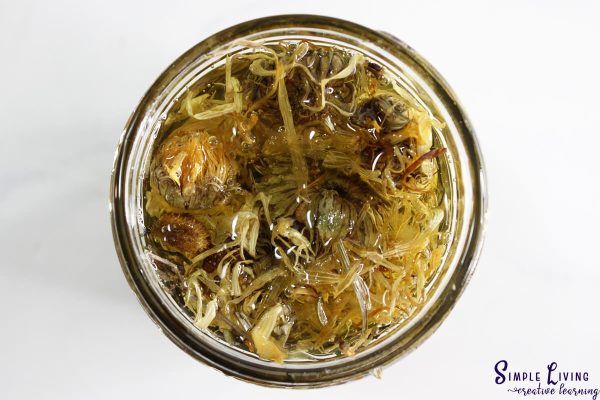
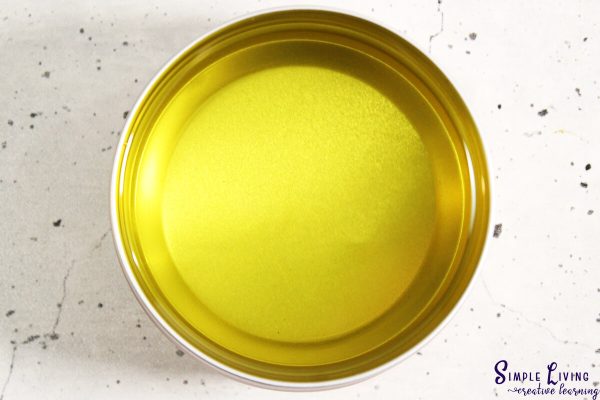
Place the dry flowers and leaves in a glass jar and cover it completely with carrier oil.

Put the lid on the jar and store in a dark cupboard for four to six weeks, shaking every couple of days to keep everything submerged.
Strain the leaves with a strainer, cheesecloth or an unbleached coffee filter. The infused oil is now ready to make into a salve.
If you want to speed up the infusion process, slowly heat the oil in a slow cooker on low heat for 24 – 48 hours.
For more information on making infused oils, check this out.
Bug Bite Balm Ingredients
To make 3 ounces of this balm, you will need:
- ½ Cup Infused Oil from above
- 2 ½ TBSP Beeswax
- 10 Drops Essential Oils, optional (Rosemary, peppermint, lemongrass, lavender, tea tree and eucalyptus essential oils are some options)
- 2 oz tins

Making Bug Bite Balm

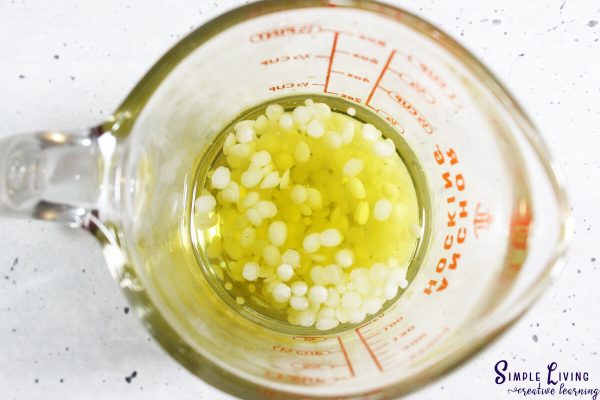
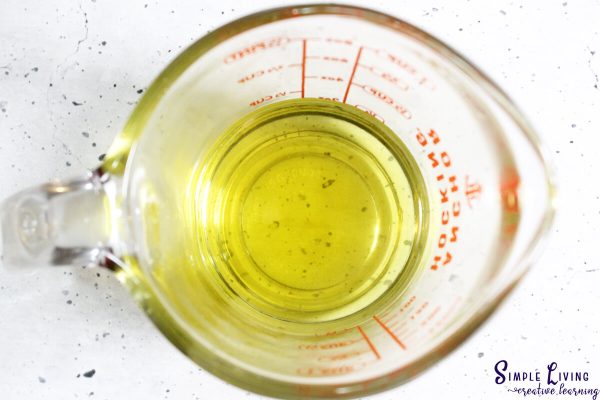
Combine the beeswax and the infused oil in a microwaveable container and heat for 30 seconds at a time in the microwave until the beeswax is completely melted. Stir in between each heat burst.

This process could also be done in a double boiler.

Pour the mixture into small glass jars or tins.
Let cool slightly and then add essential oils, if using.

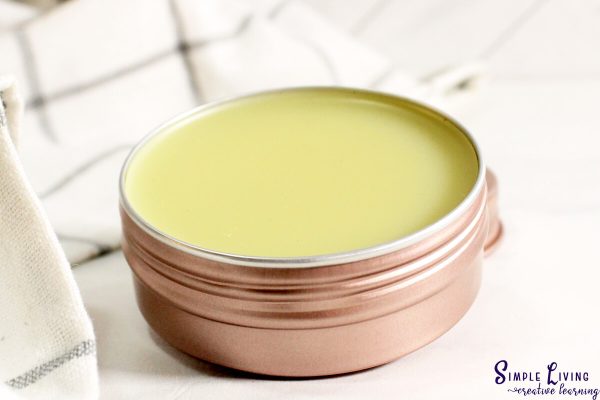
Let the salve cool and set.
The salve is now ready to label, date and store.
Storing This Salve
Place the salve in dark glass jars or metal tins to protect it from exposure to light and air. I have also used tubes for easier application.
Store in a cool, dark place.
When properly stored, this salve should last up to six months.

Using Bug Bite Salve
To use this bug bite salve,
- Apply directly to bee and wasp stings
- Helps with spider bites and mosquito bites
Other Bug Bite Remedies
Other remedies that you can also try include:
- Baking Soda Paste made by mixing baking soda with water to create a paste. Apply this paste to the bites.
- Aloe vera gel applied to the bites can help with soothing the itching and reducing inflammation.
- Witch Hazel applied to the bites helps to reduce swelling and itching.
- A cold compress held on the bites can also help with swelling and itching.

Soothing Bug Bite Balm
Ingredients
Infused Oil
- Plantain Leaves Dried
- Calendula Dried
- Chickweed Dried
- Carrier Oil Such as avocado oil, coconut oil, extra virgin olive oil or jojoba oil
Bug Bite Balm
- ½ Cup Infused Oil
- 2 ½ TBSP Beeswax
- 10 Drops Essential Oil Optional
Instructions
Infused Oil
- Before making bug bite salve, you will need to make a herb infused oil. After the infusion period has ended, this oil is then mixed with beeswax to make a salve or balm.
- I prefer to use dry leaves and flowers in my infused oils. If I am using them from plants that I have grown, I dry them completely before using to make infusions.
- Place the dry flowers and leaves in a glass jar and cover it completely with carrier oil.

- Put the lid on the jar and store in a dark cupboard for four to six weeks, shaking every couple of days to keep everything submerged.
- Strain the leaves with a strainer, cheesecloth or an unbleached coffee filter. The infused oil is now ready to make into a salve.
- If you want to speed up the infusion process, slowly heat the oil in a slow cooker on low heat for 24 – 48 hours.For more information on making infused oils, check this out.
Bug Bite Balm
- Combine the beeswax and the infused oil in a microwaveable container and heat for 30 seconds at a time in the microwave until the beeswax is completely melted. Stir in between each heat burst.This process could also be done in a double boiler.
- Let cool slightly and then add essential oils, if using.
- Pour the mixture into small glass jars or tins.
- Let the salve cool and set.
- The salve is now ready to label, date and store.
Disclaimer: These statements have not been evaluated by the Food and Drug Administration. The information on this site is not intended or implied to be a substitute for professional medical advice, diagnose or treatment. Never disregard professional medical advice or delay seeking medical treatment because of something you have read on this website. This is for informational purposes only, you should always check with your medical provider before using anything medicinally.
 Sugar Cookie Solar System