

We love sweet potato and usually use it instead of the normal spud. They are also very easy to grow and with these tips on how to grow sweet potatoes, you will be growing some for yourself in no time at all.
Sweet Potatoes
Sweet potatoes grow under the ground like regular potatoes. Above the ground, sweet potatoes are sprawling vines that can take up a huge amount of room in the garden and have flowers that resemble those of Morning Glory.
These warm-weather crops, they like around 20-30˚C, are also known as kumera. There are three different types of sweet potatoes, the golden brown, the purple and the white skinned variety. There isn’t much difference in flavour, just their skin colours.
Propogation
Propogation can be done by planting slips not by cutting up the potato and planting it. I prefer to get slips from organic sweet potatoes, but that is just personal choice. There are a couple of ways I use to get these ‘slips.’

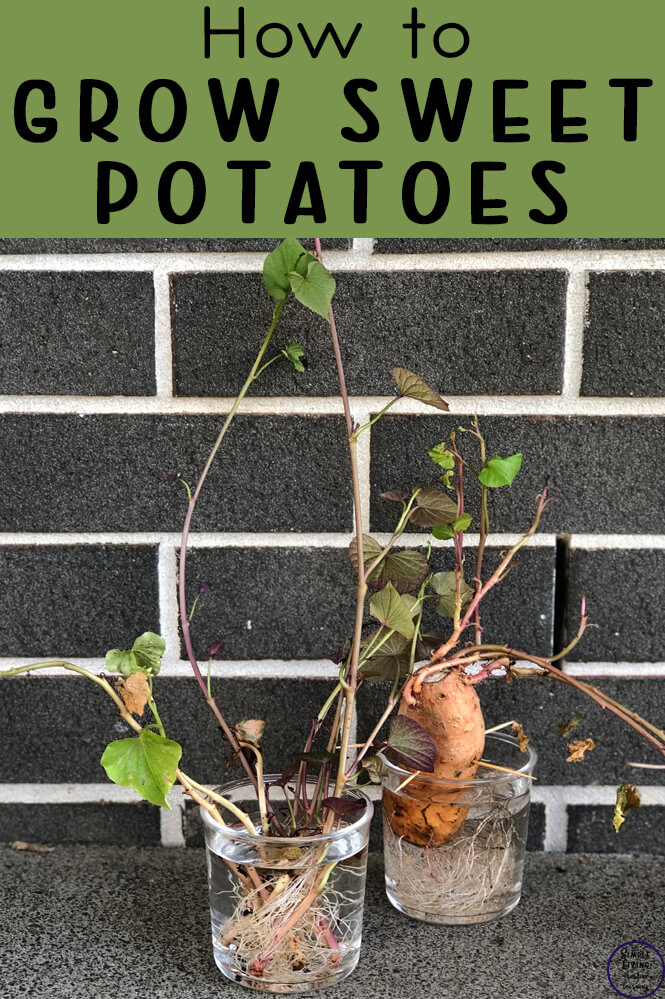
If you have sweet potatoes that have decided to sprout on their own (as pictured above), gently pull off these slips when they are about 8 inches long, with a twisting motion and place them in a jar of water, making sure the leaves are out to the water(as pictured below).
Keep the water clean by changing it often and soon, these slips will have roots.
When they have a decent set of roots, usually takes a couple of weeks, they are ready to plant in the ground. Keep your slips in a shaded area, and do not use cold water, as it could kill them. Too much sun and the leaves could go brown and die.

Another way to grow slips is to suspend a sweet potato in a jar of water. Use three toothpicks to hold the sweet potato half in/half out of the water. Again, change the water often.

Once the slips have sprouted, twist them off, place them in water to grow roots.
Once they have decent roots, they will be ready to be planted in the ground. Keep your slips in a shaded area, and do not use cold water, as it could kill them. Too much sun and the leaves could go brown and die.
Preparing the Soil
Sweet potatoes like the warmth, so are best to be planted during the warmer months – Spring/Summer – of the year, after all frosts have gone. Choose a warm site in full sun, a place where sweet potatoes have not recently been grown. The best soil is light and sandy, slightly acidic and has good drainage. Plant them in raised beds or on mounds to avoid rotting in wet weather.
Once the slips have their roots and the soil is prepared, create a slit in the soil, place your cutting in, leaving the leaves above the ground, and firmly press the soil around your cutting. Plant your cuttings about 30-40cm apart. Keep moist while the roots are developing. After this, feed monthly and water sparingly.
As the vine grows, you can trim its growth by using pruning shears. These pruning can be used as cuttings for new plants or can be added to your compost. The vines will form roots wherever the leaf joints make contact with the ground.

Harvesting
If you planted tubers, they will take about 4 months from planting in warm areas and up to 6 months in cooler areas. The best time to harvest is before any frosts or cold weather set in. The foliage and the ends of the vines will begin to turn yellow. Usually around 95 days from harvesting.
Since the sweet potatoes are under the ground, be careful when digging them up. Loosen the soil around the plant, cutting away some of the vines if necessary.
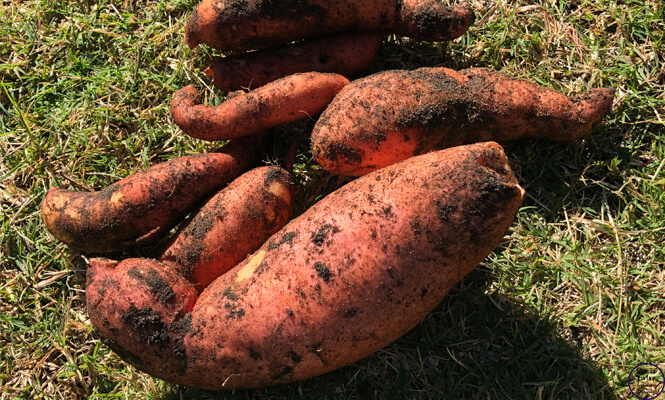
Pull up the plant and using your hands, carefully dig up the potatoes and shake off the excess dirt. Don’t wash them! Allow them to air dry in the sun for a few hours, before curing them. Curing helps to keep them longer and can help sweeten them as well.
The sweet potatoes that have been nicked or damaged during the harvesting process will need to be used right away.
To cure sweet potatoes, you need to lay them in a single layer on top of butcher paper or newspaper in a warm area (about 80˚F / 27˚C) with some humidity (around 90%). After resting for about 10-14 days, they should be ready to store in a cool place. Do not freeze.
Sweet Potato Recipes
- Slow Cooker Sweet Potato Soup
- Sweet Potato and Bacon Slice
- Creamy Mashed Sweet Potato
- Loaded Taco Sweet Potatoes
- Sweet Potato Pomegranate Salad
- Chicken and Sweet Potato Dog Chews
Pests
As with plants, there are various insects, such as grasshoppers, that may have a nibble on the leaves on your sweet potato plants. This damage is rarely tragic, just merely cosmetic. The weevil is much more of a problem. To prevent damage from these, make sure to use crop rotation and never plant sweet potatoes in the ground where they have previously grown.
Overall, sweet potatoes are a easy and forgiving crop to grow. The leaves can be edible, though don’t feed them to your dog, can be steamed or stir-fried and make a wonderful addition to salads, though they can be quite bitter. Prepare like spinach or turnip greens.
We love sweet potatoes baked, though they can be boiled, steamed or fried as well. Small cooked pieces can be added to curries and casseroles or even used as a substitute for pumpkin in many dishes.
 Homemade Honey Lemon Ginger Cough Drops