
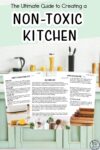
The kitchen is often considered the heart of the home. It is a place where meals come together, memories are created, and time is shared with the people who matter most. But what many don’t think about is how much kitchens these days contain hidden toxins that can quietly affect both your health and the environment. From chemical-coated cookware to plastic containers that may leach harmful substances, everyday choices in the kitchen can have a bigger impact than we realise. This ultimate guide to creating a non-toxic kitchen helps make the transition to a non-toxic kitchen achievable – not overwhelming.
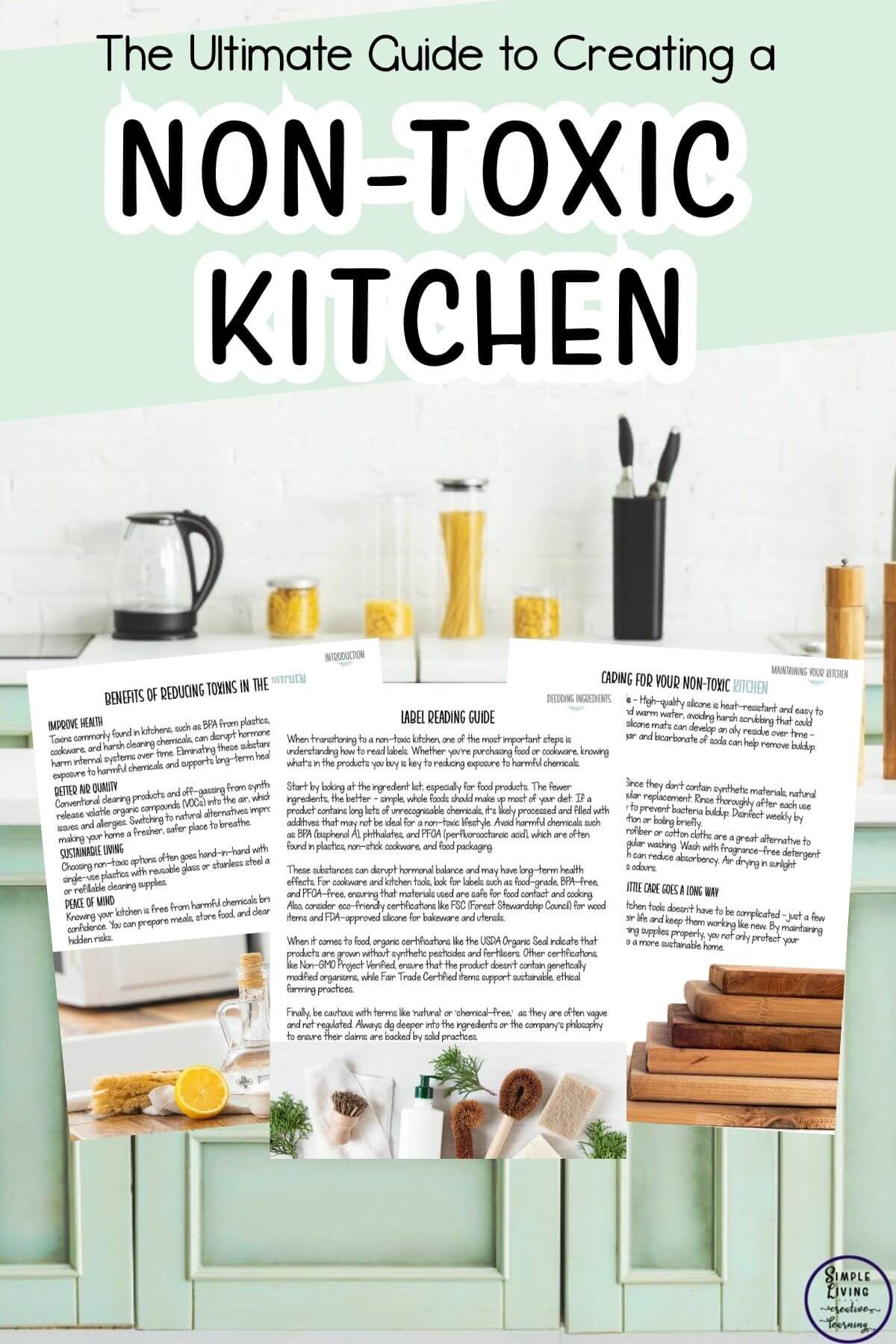
Creating a Non-Toxic Kitchen
Creating a non-toxic kitchen involves making more informed decisions that support a healthier lifestyle. It goes beyond simply just swapping out products—it’s about building a space that supports your health and reflects a more mindful, sustainable way of living. By reducing exposure to harmful chemicals, you can better protect your family while minimising your environmental footprint, and cultivating a cleaner, safer home.
Let’s look at one example of one way a non-toxic kitchen benefits both your body and the environment – food choices. Choosing fresh, whole foods from small, local farmers not only supports a more nutrient-rich diet, but it also helps reduce reliance on industrial farming practices like monoculture which can strip soil of nutrients and reduce biodiversity. In contrast, many small-scale farms practice polyculture, growing a variety of crops in ways that mimic natural ecosystems and help restore soil health.
Whether you’re just starting out or refining your current habits, here are practical ways to reduce toxins in your kitchen:
Swap out Cooking Pans
Non-stick cookware is often coated with Teflon, which contains a type of perfluorocarbon (PFC). When overheated (above 260˚C / 500°F), these coatings can break down and release harmful chemicals into the air. Safer alternatives include stainless steel, cast iron, and ceramic cookware.
Safer Food Storage
Plastic containers aren’t completely stable, especially when exposed to heat. Materials like polyethylene and polypropylene can break down in the microwave or dishwasher, potentially leaching chemicals into your food—particularly with oily items. Opt for glass containers, jars, or silicone storage bags instead. If freezing liquids in glass jars, leave space at the top to prevent cracking.
Filter Your Water
Tap water can sometimes contain contaminants like PFAS, chlorine, heavy metals, or even trace herbicides. Instead of relying on bottled water which often comes in plastic bottles, consider a high-quality filtration system. Activated charcoal filters are a popular option, as they bind to and help remove many common toxins. Countertop systems can also be a convenient and sustainable solution.
Skip Plastic Cutting Boards and Sponges
Cutting on plastic boards can introduce microplastics into your food over time. While research is ongoing, microplastics have already been found in various parts of the human body. Wooden or stainless steel cutting boards are a safer alternative. Similarly, plastic sponges contribute to significant waste—consider a wooden dish brush with a replaceable, compostable head instead.

Cleaners and Detergents
Many conventional cleaners contain undisclosed ingredients and can release volatile organic compounds (VOCs), which may trigger allergies or respiratory issues. Switching to natural cleaning products such as this homemade dishwasher powder, or this liquid laundry detergent, can reduce exposure to these chemicals while also cutting down on plastic waste.

Growing Herbs
Store-bought herbs often come in single-use plastic packaging. Growing your own herbs on a windowsill or in a small garden just outside the back door is simple, cost-effective, and ensures your herbs are fresh and chemical-free. Basil, mint, thyme, rosemary, and chives are herbs that are easy to grow indoors.
Guide to Creating a Non-toxic Kitchen
Your Step-by-Step Blueprint for a Healthier Home and a More Sustainable Lifestyle
This printableBook is designed to guide you through that transformation; helping you build a kind of kitchen that prioritises health, sustainability and simplicity. Whether you’re just beginning or looking to improve what you’ve already started, you’ll find practical, easy-to-follow advice throughout. Inside, you’ll learn how to evaluate your kitchen for potentially harmful items, discover safer alternatives for cookware, storage, and cleaning supplies, and explore simple DIY solutions using natural ingredients. You’ll also gain insight into making more informed food choices and creating a toxin-free kitchen that fits your budget.
By the end, you’ll be equipped with the knowledge and tools to create a healthier kitchen—and take meaningful steps toward a cleaner, more conscious lifestyle for you and your loved ones.
What You’ll Learn Inside
This isn’t just information—it’s a practical roadmap you can actually follow.
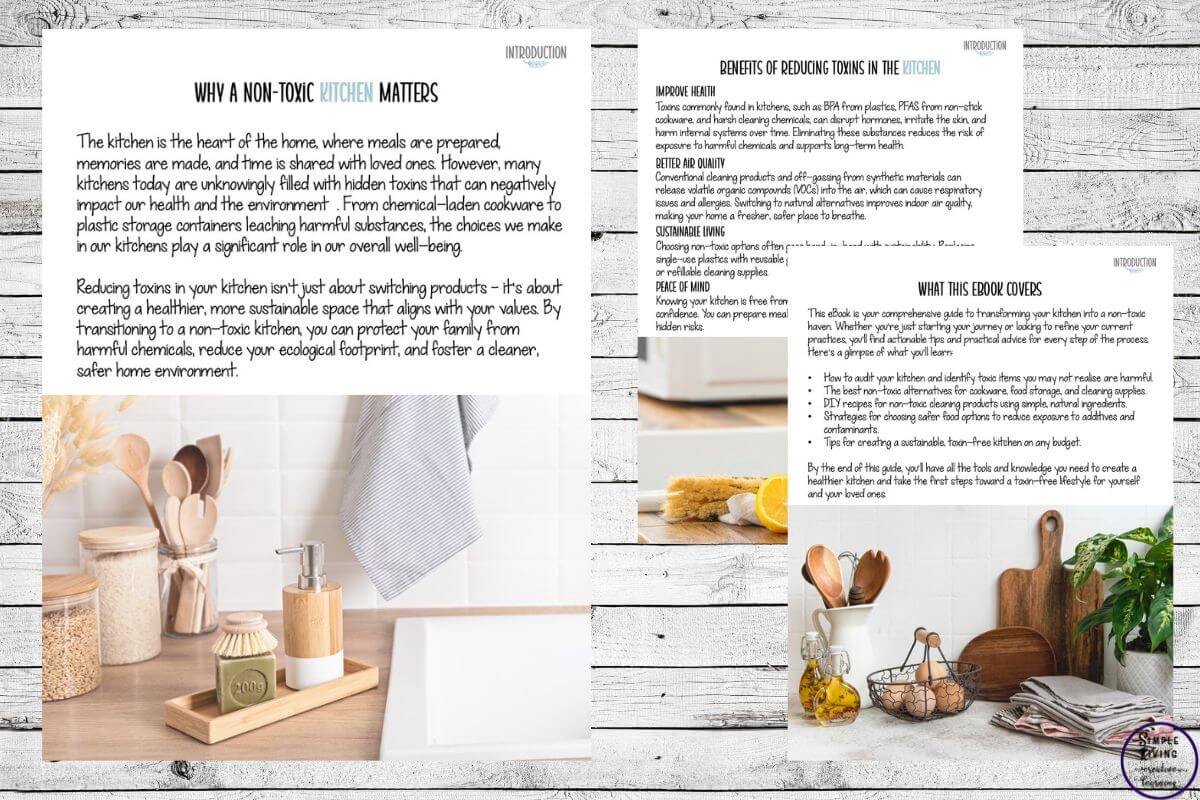
Why a Non-Toxic Kitchen Matters
The Benefits of Reducing Toxins
Discover how lowering your toxic load can support your health, energy, and overall well-being—while also helping the environment.
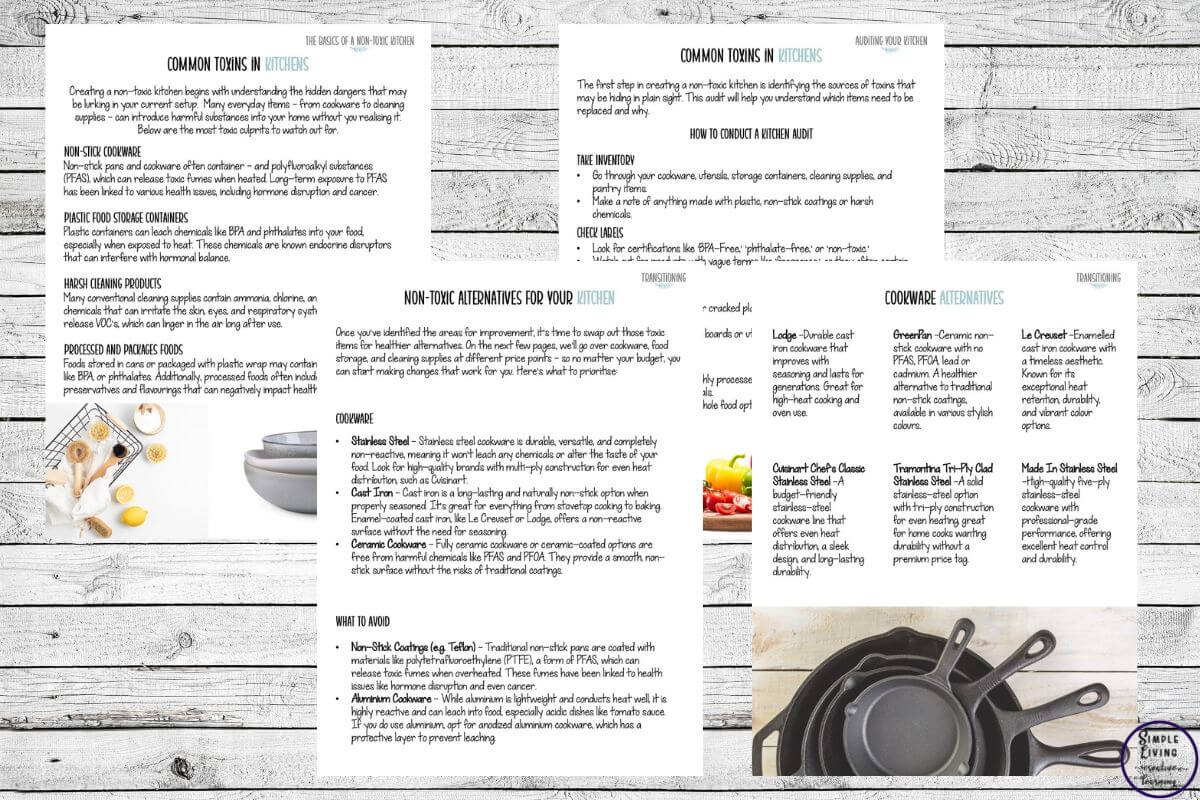
Common Toxins Found in the Kitchen
Learn where toxins hide (even in places you’d never expect), including:
- Non-stick coatings
- Plastic containers
- Tap water contaminants
- Conventional cleaning products
Non-Toxic Alternatives for Your Kitchen
Swap harmful products for safer, effective options—without sacrificing convenience.
Safer Cookware Choices
Find out what to avoid and what to use instead, including:
- Stainless steel
- Cast iron
- Ceramic options
Food Storage Solutions That Won’t Leach Chemicals
Say goodbye to questionable plastics and discover better alternatives like:
- Glass containers
- Silicone storage
- Low-waste storage methods
Non-Toxic Cleaning Supplies
Learn how to clean your kitchen effectively without exposing your home to harsh chemicals, plus simple DIY solutions.
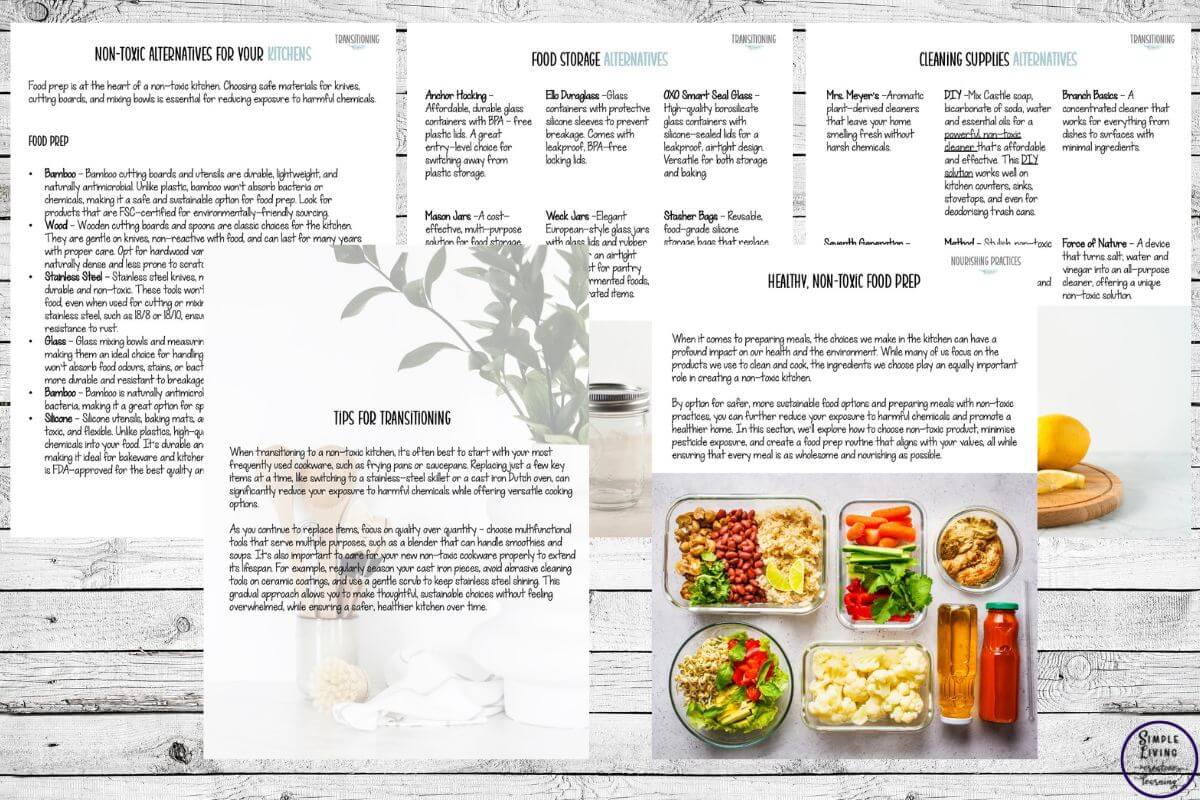
Tips for Transitioning Without Overwhelm
You don’t need to replace everything overnight.This section shows you how to make changes step-by-step—on any budget.
Healthy, Non-Toxic Food Prep
Simple ways to prepare food that reduce exposure to additives, contaminants, and unnecessary chemicals.
Label Reading Made Easy
Finally understand what’s actually in your products—and what to avoid.
No more confusion. No more guessing.
Caring for Your Non-Toxic Kitchen
Learn how to maintain your space so it stays clean, safe, and supportive of your health long-term.
Who This eBook Is For
This guide is perfect if you:
- Want a healthier home but don’t know where to start
- Feel overwhelmed by conflicting ‘clean living’ advice
- Are concerned about chemicals in your food or home
- Want practical, realistic changes (not extremes)
- Care about sustainability and mindful living
You Don’t Need to Be Perfect—Just Intentional
This isn’t about fear. It’s about empowerment.
Every small swap you make matters.
Every better choice adds up.

Start Creating a Healthier Kitchen Today
You deserve a home that supports your health—not one that works against it.
This guide gives you everything you need to confidently transform your kitchen into a cleaner, safer, more intentional space.
To grab your guide, click on the link below:

 100+ Ways to Learn with Building Blocks