

Once you have an active sourdough starter, you should really start thinking about dehydrating some of this starter as it is an important part of the sourdough journey. Why do you need to do this? Because dehydrating sourdough starter is a wonderful way to preserve your starter, storing it indefinitely for future use. Learn how to dehydrate your sourdough starter as a way to preserve your starter in case something happens, so you will never had to start from scratch again.
Why Dehydrate Sourdough Starter?
At this time you may think this is unnecessary, but who knows what the future holds. With so many things happening, kids growing up, or the family growing and moving away. New jobs, increases to the cost of living, there are so many things that life throws at us, that we need to think about how this can affect our future. There may come a time where you are unable to bake, so your sourdough starter just sits and sits. What will happen during this time to your stater? Yes, you can store it in the fridge for months, though wouldn’t it be good to have extra backup?
There are many other reasons that people dehydrate their sourdough starter:
- It is good for times when you do need to take a break from making sourdough such as injury, illness, having a baby, surgery, moving house or busy with work.
- A friend, who lives miles away may like to start baking sourdough, and you can share some of your starter with them.
- It reduces the risk of losing your starter to mould, contamination, jar breaking or neglect.
- A good way to use up some of the extra discard.
- It makes it easier to transport, store and preserve your sourdough starter.
- Is beneficial as it ensures you always have some starter on hand and you don’t need to worry about your sourdough starter dying.
- You will never have to start from scratch again.
- Easily give your sourdough starter as a gift.
Dehydrating sourdough is an incredibly easy process that allows you to have an ‘insurance policy’ for a rainy day.
What is Dry Sourdough Starter?
Dehydrated or dried sourdough starter is a mature sourdough starter that has been dried, using either an oven or dehydrator to dry it out so that is now exists as a powder or small dry pieces.
All the goodness, the bacteria and yeast are still present in this dry form. It just needs water and flour to reactivate it.
Once you are ready to activate some of your dry starter, you will just need to add water and flour to the sourdough flakes over a period of a couple of days to get it moving again.
When to Dehydrate Your Sourdough Starter
When drying sourdough starter, you want to dry it when it is mature after it has ‘come to age.’ If you started from scratch, wait at least three months and making good bread before drying out some of your starter.
You could do this sooner if you purchased or were given some mature sourdough starter or dry starter that you reactivated it yourself.
How Long Does it Take?
Drying starter is a quick and easy process as long as the weather is not too cold.
It will need a warn, dry environment. Moisture and humidity can play havoc when drying your starter, causing mould or other problems.
If drying at room temperature, it can take around 6 hours, though this will depend on how thinly it is spread over the paper.

Active Starter or Discard?
Both active sourdough starter or discard can be dehydrated. If discard was dried, as it is not active at the time of drying, it does take longer for it to revive, usually needing an extra feeding or two before it is ready to use.
Tips for Drying Starter
- Use good quality baking paper as the starter will be quite wet. The cheaper paper can absorb too much water and end up ripping.
- Spread the starter as thin as you can. This ensures fast and even drying.
- You want the starter to dry as quickly as possible to avoid attracting fruit flies or other bugs.
- Watch the starter as it is drying. Break up any thicker pieces that don’t seem to be drying as quickly as the rest.
- While good circulation is a must, don’t place the wet sourdough starter sheets too close to a fan or window/door or it could get blown away.
Can you Freeze Sourdough Starter?
Sourdough starter can also be kept in the freezer. It is a long term storage solution, though if you are limited on freezer space, drying out the starter is a better way to store it.
If you have a freeze-dryer, you can also use this to dry your starter for long term storage.
How to Dry Sourdough Starter
First, you will need to feed you starter.
When it is at its peak, use a pastry brush to spread a thin layer of the starter over a piece of baking paper.
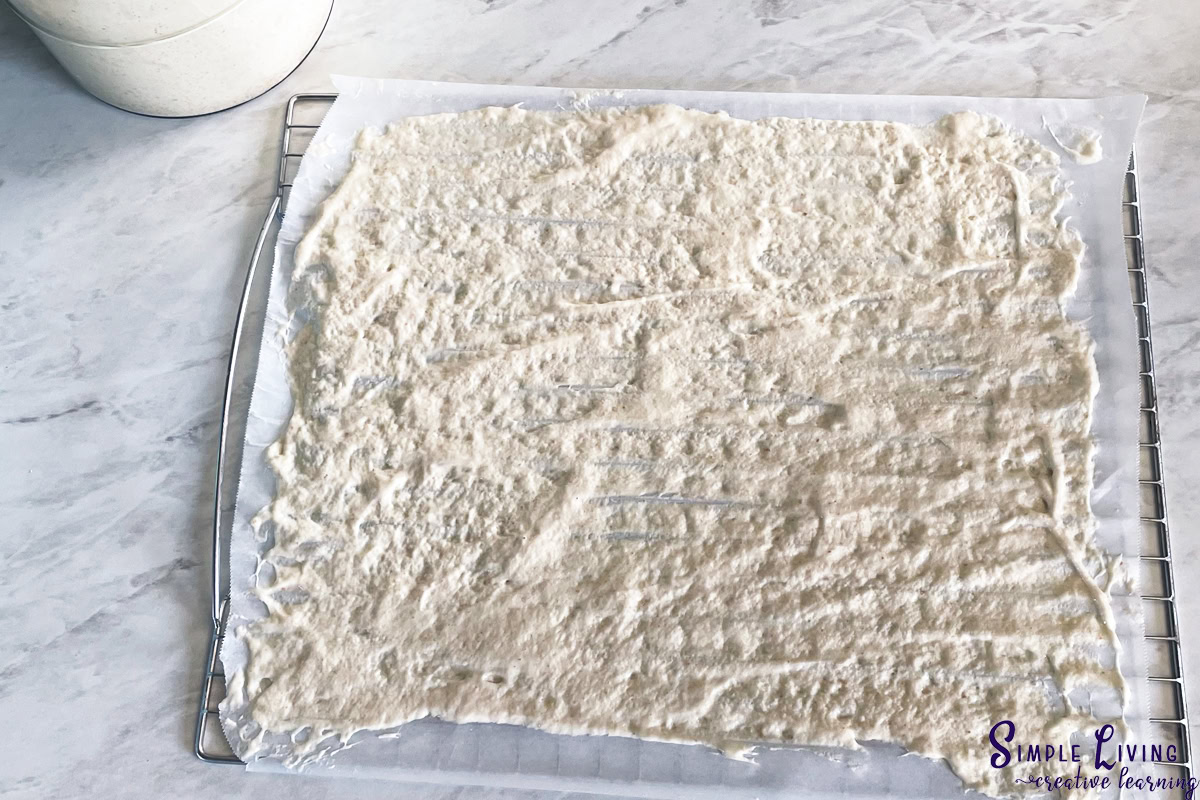
Leave the paper in a warm place to dry. The time it takes to dry will depend on the temperature and humidity of your home.
Make sure that the place you choose is not near a window or door where the paper can get blown away.
Keep an eye on it to make sure that it doesn’t mould or get insects on it.
Once it is dry, you will need to store your starter.
Drying in a Dehydrator or Oven
If you have a dehydrator, it is really an efficient way to dry out some starter.
Spread a thin layer of starter on baking paper or trays and place in the dehydrator using the lowest temperature you can.
Ideally, you just want the air to circulate around the starter, drying it as it goes. Any setting under 37˚C (98.6˚F) will not kill all the good bacteria you need.
The same can be done in the oven. After spreading the starter on lined baking trays, place in the oven with only the light on. Do not use any heat. you could even place it in the oven after it has been turned off, using the residual heat to dry the starter.
Storing Dry Starter
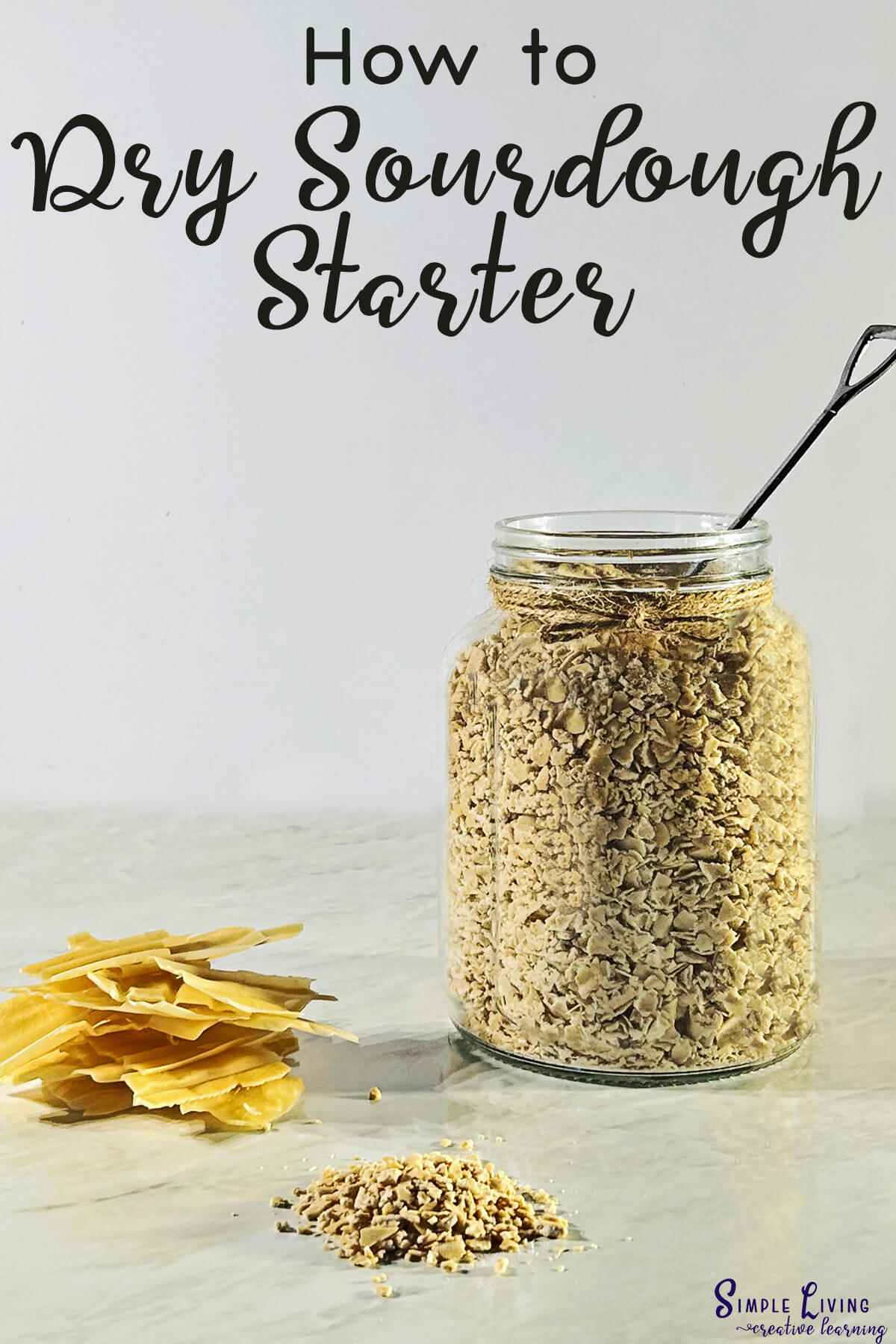
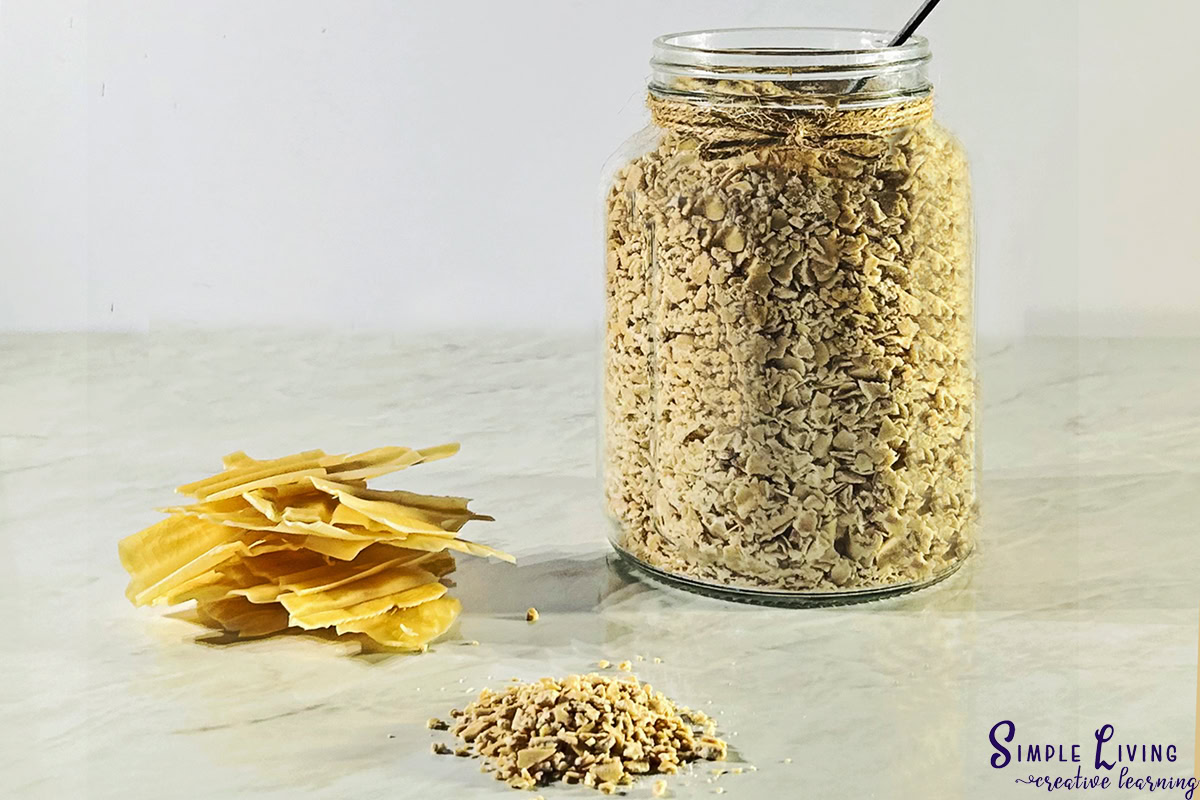
Once your starter is completely dry and brittle, there are many different ways to store it. The dried sourdough starter can be stored as shards, granules or powder. There is really no difference between them as long as they are dried and stored correctly, they should rehydrate easily.
- Place broken shards in a clean, dry glass. Screw on the lid and store in a cool, dark place.
- Break into pieces and store in a zip lock back away from heat and light.
- Grind into a powder and store in a glass jar or zip lock bag.
- Vacuum seal the pieces, shards or powder.
Dried sourdough starter should last indefinitely as long as it is kept away from light, heat and moisture.
More Sourdough Resources
- Sourdough Mini Choc Chip Muffins
- Blueberry Muffins using Sourdough Discard
- Homemade Sourdough Tortillas
- Sourdough Starter Discard Donuts
- Sourdough Artisan Loaf
- Tasty Sourdough Discard Recipes
- Sourdough Sandwich Bread
- Chocolate Brownies
- Sourdough discard pancakes
- How to Make a Sourdough Starter

How to Dehydrate Sourdough Starter
Equipment
- Good Quality Baking Paper
- Pastry Brush
Ingredients
- Sourdough Starter Active and Bubbly is better
Instructions
Dry Sourdough Starter
- First, you will need to feed you starter.
- When it is at its peak, use a pastry brush to spread a thin layer of the starter over a piece of baking paper.
- Leave the paper in a warm place to dry. The time it takes to dry will depend on the temperature and humidity of your home.
- Make sure that the place you choose is not near a window or door where the paper can get blown away.
- Keep an eye on it to make sure that it doesn't mould or get insects on it.
- Once it is dry, you will need to store your starter.
Drying Sourdough Starter in a Dehydrator or Oven
- Spread a thin layer of starter on baking paper or trays and place in the dehydrator using the lowest temperature you can.
- Ideally, you just want the air to circulate around the starter, drying it as it goes. Any setting under 37˚C (98.6˚F) will not kill all the good bacteria you need.
- The same can be done in the oven. After spreading the starter on lined baking trays, place in the oven with only the light on. Do not use any heat. you could even place it in the oven after it has been turned off, using the residual heat to dry the starter.
- Once it is dry, you will need to store your starter.
Storing Dry Sourdough Starter
- Once your starter is completely dry and brittle, there are many different ways to store it. The dried sourdough starter can be stored as shards, granules or powder. There is really no difference between them as long as they are dried and stored correctly, they should rehydrate easily.
- * Place broken shards in a clean, dry glass. Screw on the lid and store in a cool, dark place.* Break into pieces and store in a zip lock back away from heat and light.* Grind into a powder and store in a glass jar or zip lock bag.* Vacuum seal the pieces, shards or powder.
- Dried sourdough starter should last indefinitely as long as it is kept away from light, heat and moisture.
Nutrition
Nutritional information is an estimate and provided as a courtesy. The values may vary according to the ingredients and tools that are used. Please use your preferred nutritional calculator for more detailed information.
 Winter Colour By Code Worksheets