
After learning how to dry sourdough starter, another thing you will want to learn is how to rehydrate this dried sourdough starter for when you need it. Or, maybe you want to learn how to make your own sourdough products and have purchased a dried sourdough starter to help with this process.
Sourdough Starter
Sourdough starter is a simple mixture of flour and water which acts as a natural leavening agent. The natural, wild yeast that is present in all flour is cultivated in a way that you are able to bake with it.
This starter is also filled with bacteria known as lactobacilli, and unlike store bought bread that uses commercial yeast to help it rise, this starter is used to create the rise in sourdough bread.
Rehydrating Starter or Starting from Scratch
By rehydrating sourdough starter, you are getting a head start on the time it takes to mature. A rehydrated starter becomes more healthy and vigorous and is ready to use a lot quicker than a starter that has been started from scratch.
Starting a sourdough starter from scratch may be cheaper, if you have to purchase dried sourdough starter, but it could take a couple of weeks to be strong enough to be used for making a loaf.
When is Sourdough Starter Ready to Use?
There are a few ways to check to see if your starter is ready to use:
- It will have a pleasant aroma
- The texture will be spongy or fluffy
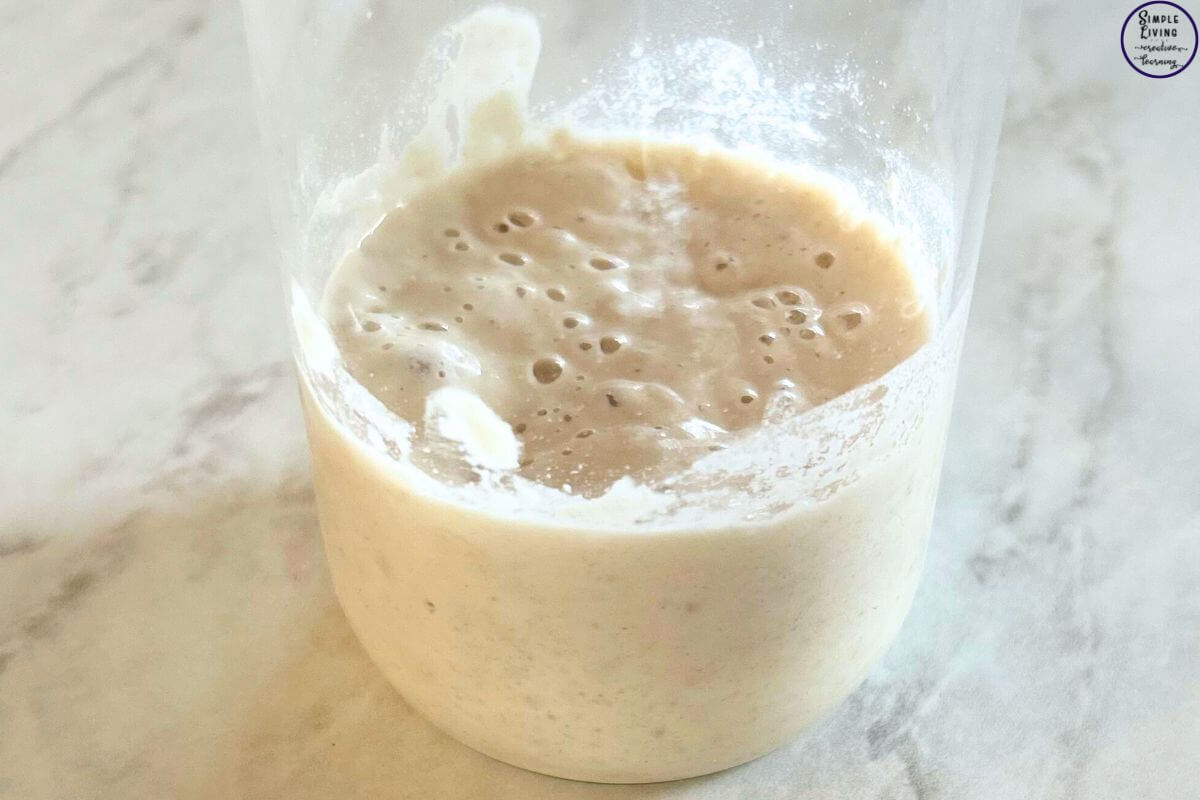
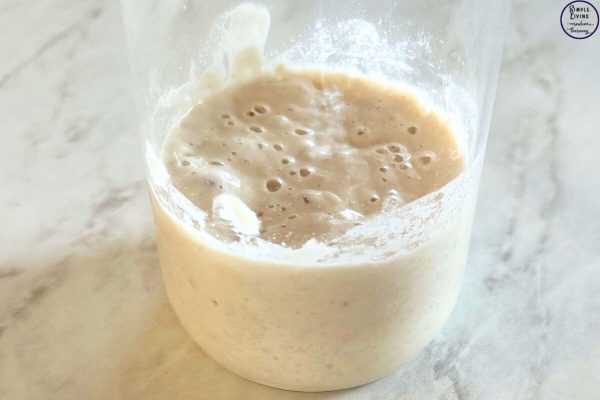
- It will have lots of different sized bubbles on the surface and throughout it. If you use a glass jar, you will be able to see bubbles through the side of the jar as well as on top.
- It will grow to about double in size. To measure it, place a rubber band around the jar at the top of the starter after you have feed it. You can see how much it has grown above the rubber band.
How to Know if Your Stater is Bad
You can normally see and smell if it is bad.
If you see orange or pink streaks or mould on the top of your starter, than this is a sign that it is bad and needs to be thrown out.
A bad smell is another indicator that something is not right and you need to start again.
What is the Brown Liquid on my Starter?
When your starter has been sitting unused for a period of time, you may notice some dark liquid on top of it. This is normal and harmless.
Known as ‘hooch,’ this is a naturally occurring liquid that indicates your starter is hungry and needs to be fed.
Simply pour of the liquid and feed the starter.
Why do I need to Discard?
The reason for discarding is to help keep your starter fresh and keep the acidity levels under control.
If you don’t keep a large starter, you may not need to discard at all.
Though, this discard is not bad, so it can be used in many recipes in place of flour and liquid.
Supplies Needed for Rehydrating
To rehydrate dried sourdough starter, you will need:
- A glass jar with a lid – having a spare glass jar is a great idea
- Basic kitchen scale
- Small spatula or spoon
- Dried sourdough starter
- Unbleached flour – bread or plain (all-purpose) work well
- Filtered water
Activating Dried Sourdough Starter: Step-by-Step

First Day – Part 1
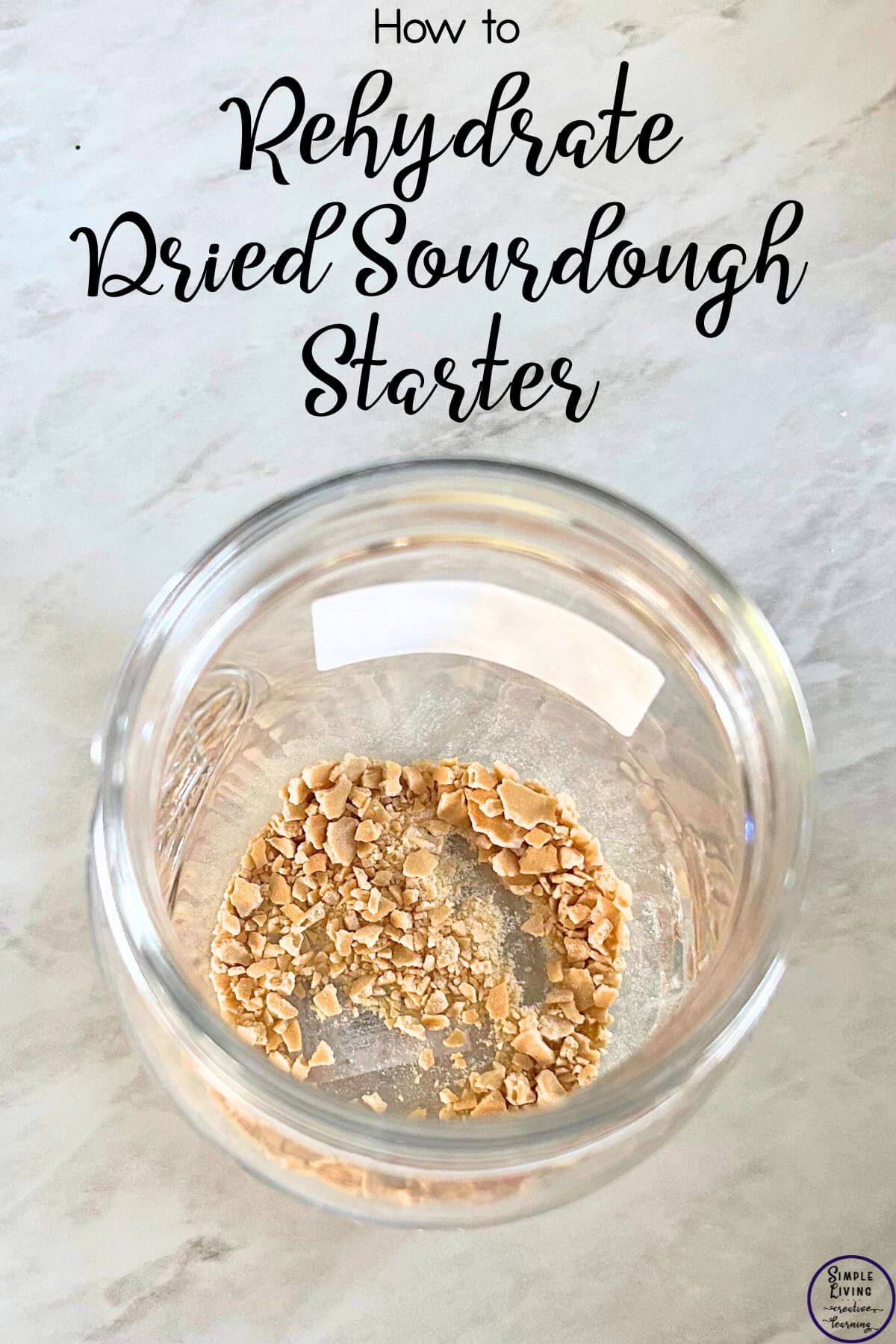
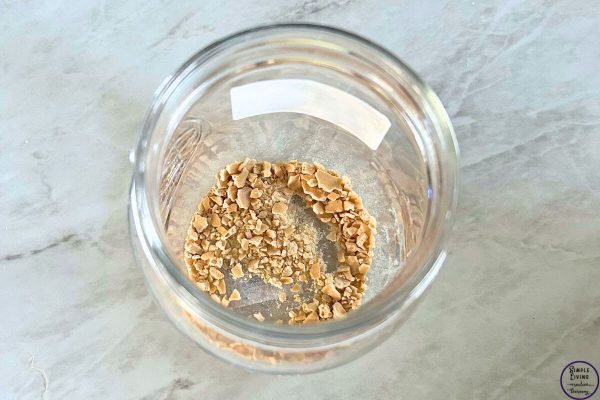
Add the 15g of dried sourdough starter to your glass jar.
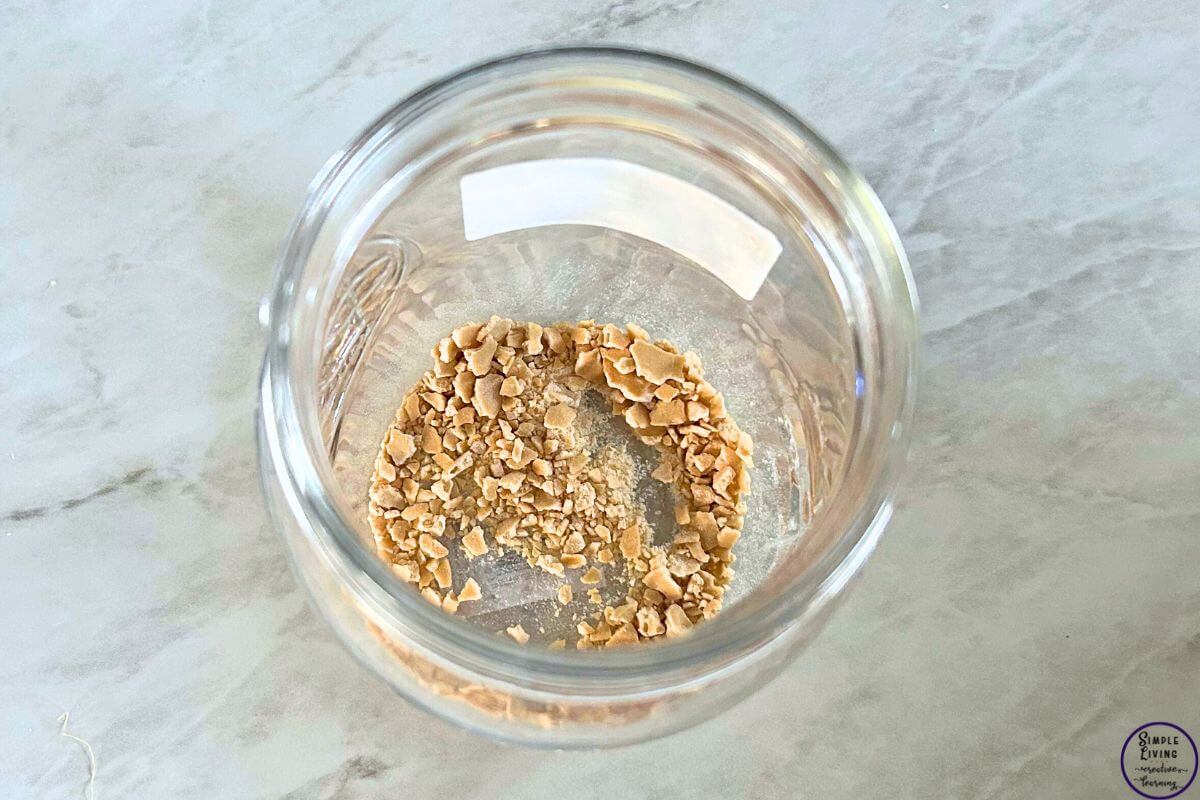
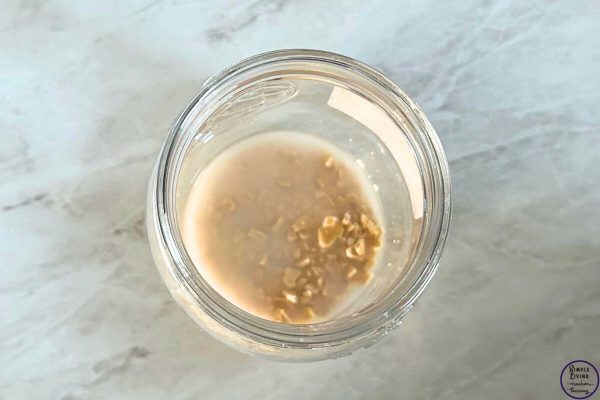
Pour in 30g of filtered water and stir well.
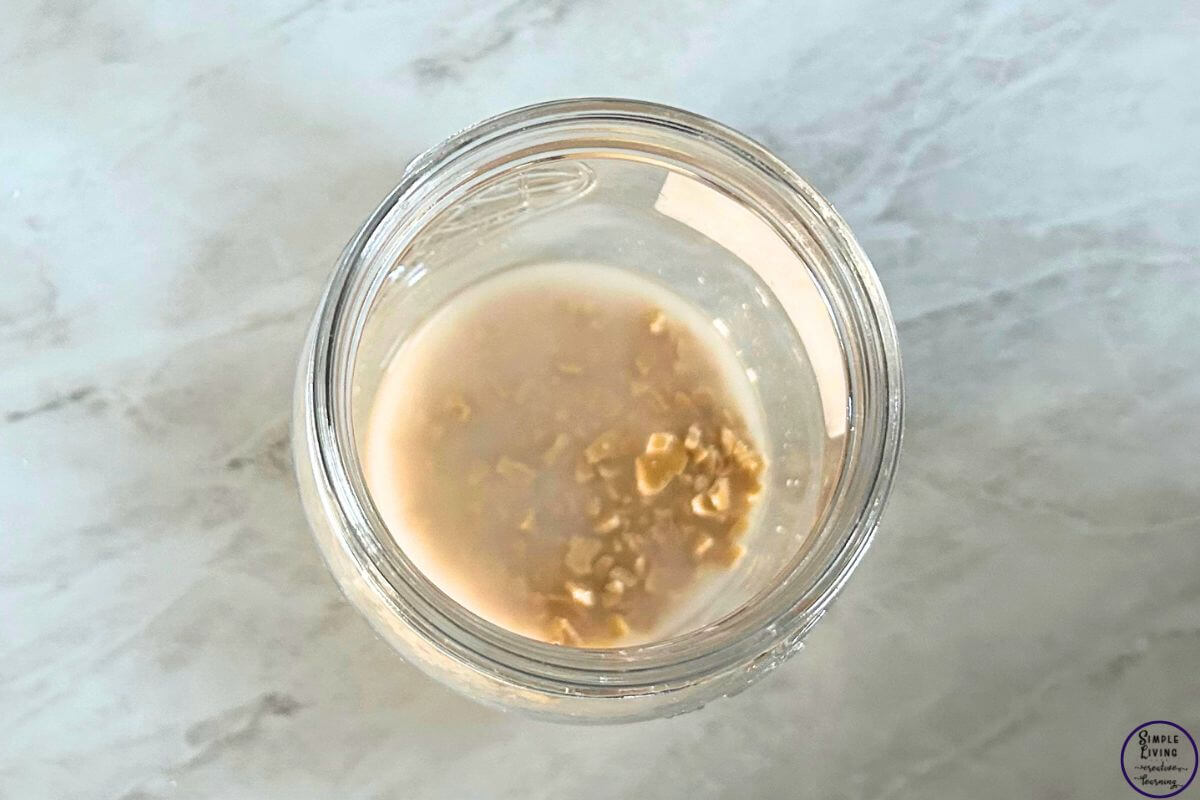
Cover loosely with a lid and place in a warm location for three hours. The dried starter should dissolve.
27˚C is the optimal temperature which can be achieved by sitting the jar in the oven. In cool climates, you may want to place it in the oven with the oven light on.
First Day – Part 2
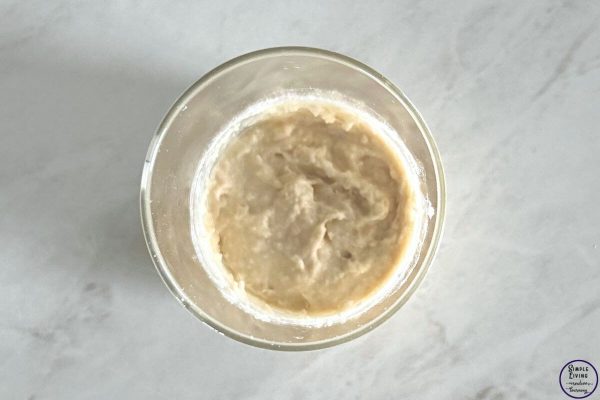
At the end of the three hours, mix in 15g of your choice of flour.
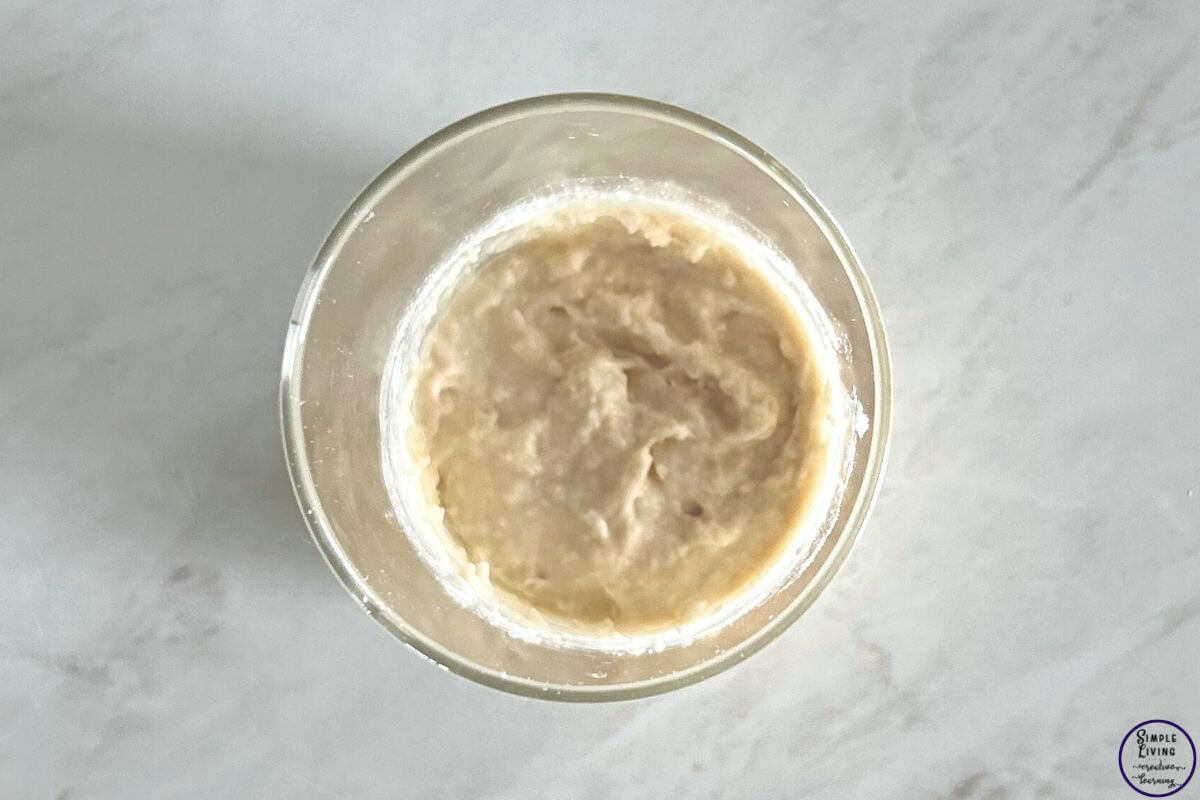
Stir well and cover loosely again.
This time leave in a warm spot for 12-14 hours.
At the end of this, there may not be much activity at all.
Second Day
Once the 12-14 hours is up, it is time to feed the starter again.
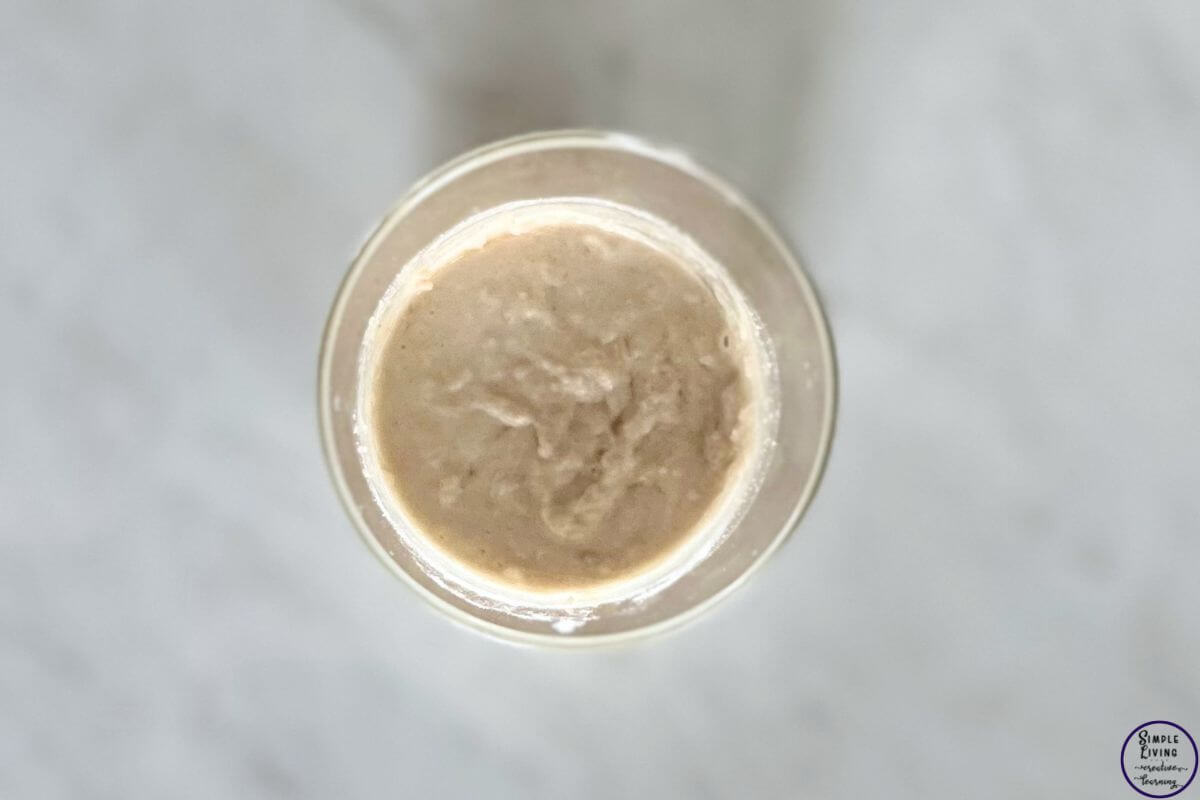
Without discarding anything, add another 15g of flour and 15g of water and mix well.
Replace the lid and place in a warm location.
Third Day
It is time to feed the starter again.
Without discarding anything, add another 15g of flour and 15g of water and mix well.
Replace the lid and place in a warm location.
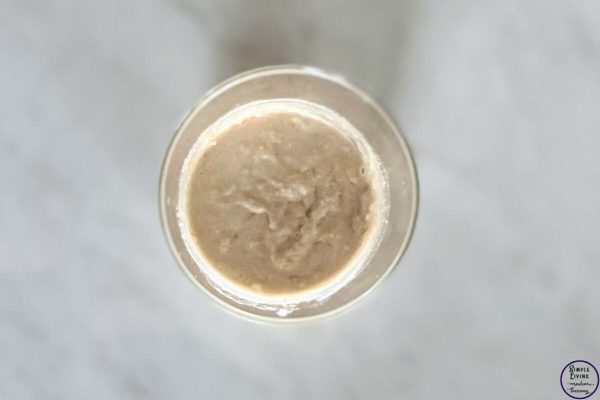
At the end of this time, you may begin to see signs of activity such as small bubbles and a slightly sour smell.
Fourth Day
Discard all but 15g of your sourdough starter.
Add 30g flour and 30g water to the 15g starter.
Replace the lid and place in a warm location for 12 hours.
Fifth Day
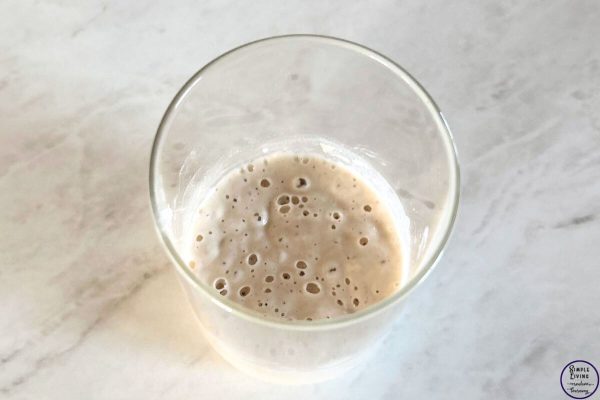
The starter should be starting to get very active. It should be starting to double in size, be quite bubbly and smell sweet with just a small hint of sourness.
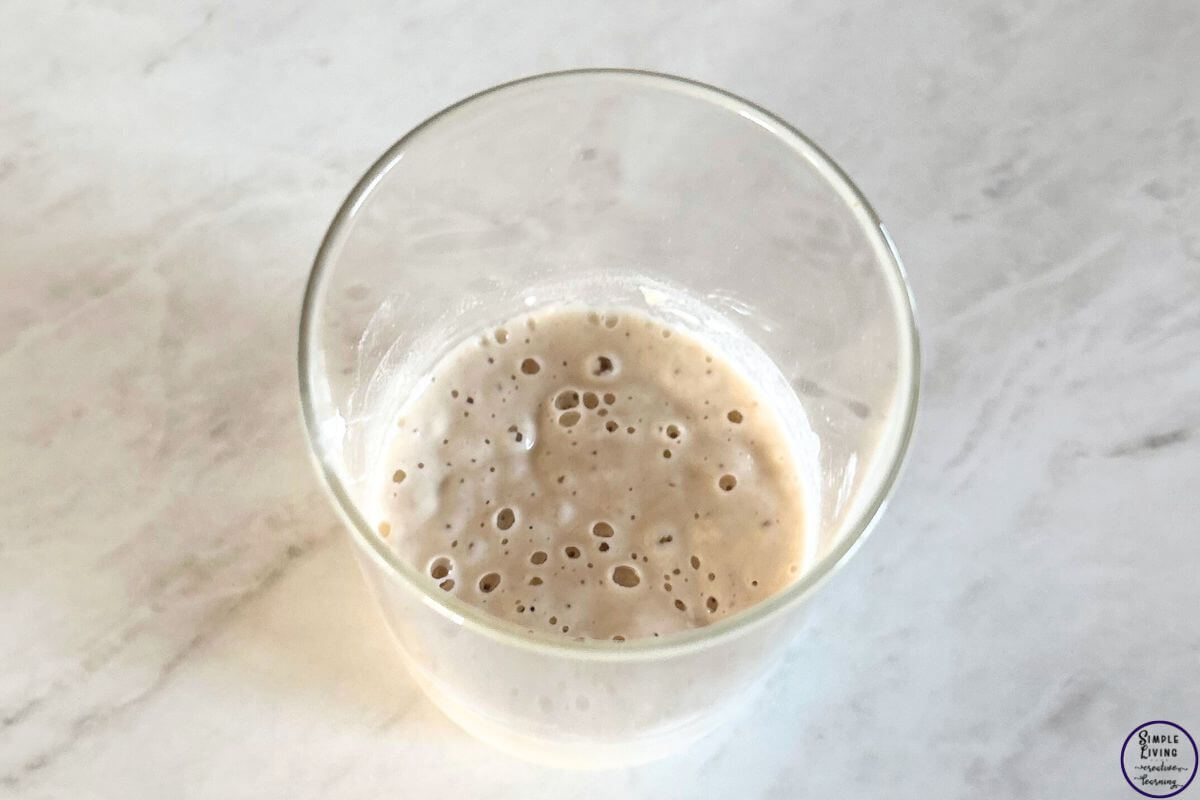
Do one more discard of all but 15g of your sourdough starter, then add the 30g of water and 30g of flour and mix well.
Keep an eye on your starter and see how long it takes to double in size.
When it is at its peak, discard and feed again like you did earlier in the day.
Sixth Day
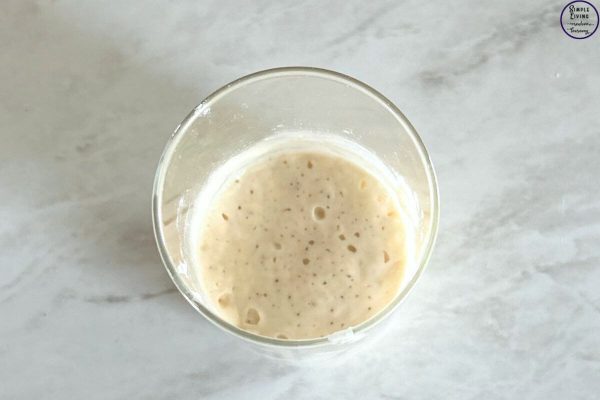
Your starter is activated and ready to be fed on a normal feeding schedule.
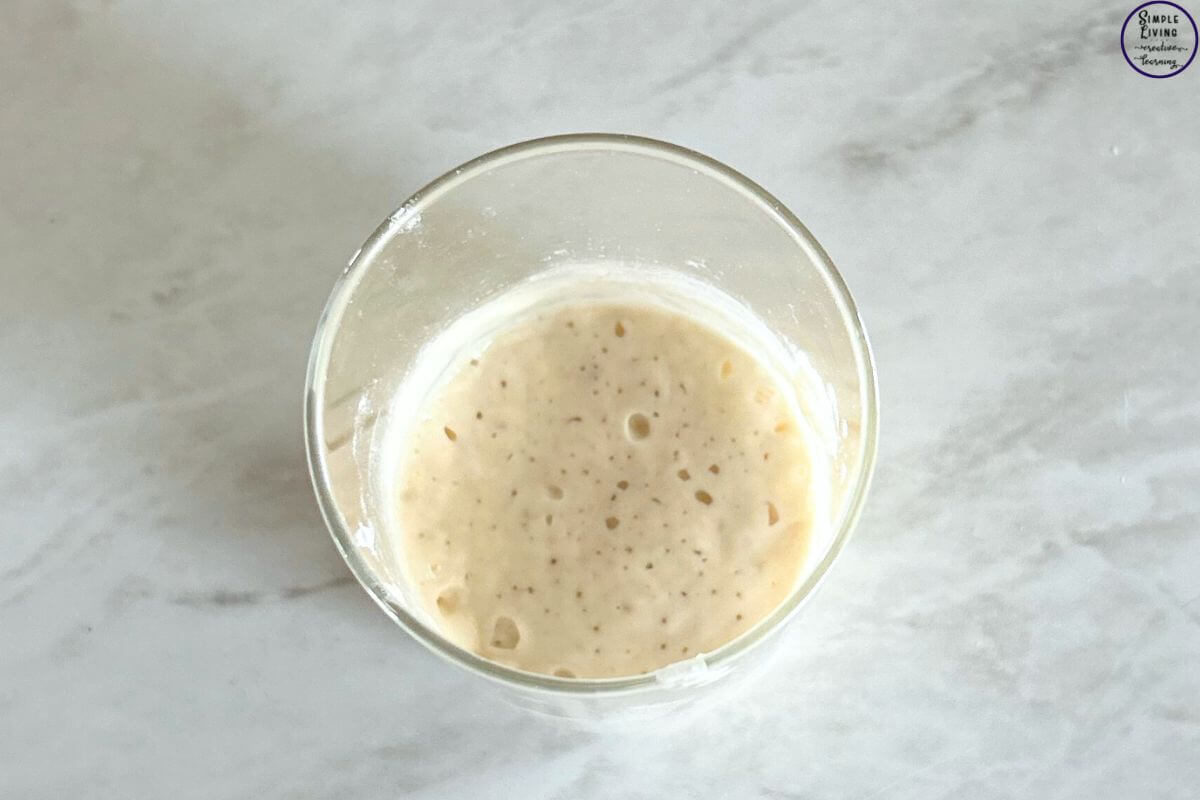
You always want your starter to be thick, like a thick pancake mix consistency. Sometimes it may have a liquid, known as hooch on time and this is fine. Just mix it in and feed like normal.
This sourdough starter is what is used to make bread. Make sure to feed it 4+ hours before you are using it to make sure that it is at its strongest when you are going to use it.
If you are only going to be baking a sourdough loaf once or twice a week, it is best to store your starter in the fridge. After taking what you need for your bread, feed it and put it in the fridge until you need to feed it again before using for a loaf of bread.
When you are ready to make a loaf, remove the starter from the fridge and allow it to come to room temperature, then feed it to wake it up.
Sourdough Discard
More Sourdough Resources
- Sourdough Mini Choc Chip Muffins
- Blueberry Muffins using Sourdough Discard
- Homemade Sourdough Tortillas
- Sourdough Starter Discard Donuts
- Sourdough Artisan Loaf
- Tasty Sourdough Discard Recipes
- Sourdough Sandwich Bread
- Chocolate Brownies
- Sourdough discard pancakes
- How to Make a Sourdough Starter
Storing Your Starter
If you are not intending to use your starter every day, then it is best to keep it in the fridge. When doing this, feed your starter, let it stand at room temperature for 2-3 hours for the yeast to do its thing, then place in the fridge. Once in the fridge, it will only need to be fed every once a week to maintain it.
If leaving out at room temperature, it will need to be fed daily, at the same time if at all possible.
You can also freeze your starter. This is great for those times that you need to store it for a long period without feeding. Just double the amount of flour added at feeding time, which makes it into a very thick paste, then place in an airtight container and freeze for up to one year. To use again, just thaw at room temperature and feed as above to help it regain its strength.
Using your Sourdough Starter
When you want to use your sourdough starter in a recipe such as sourdough bread, then feed it about 4 – 8 hours before intending to use it, letting it stand at room temperature, allowing it to double in volume, with bubbles appearing, breaking the surface. This indicates that the starter is strong and active and ready for use. Remove what you need, feed and then store until next time.
Want to Take a Break?
If you want or need to take an extended break from making sourdough, I recommend dehydrating your starter or freezing it, so when you are ready to start again, you will have some on hand and don’t have to start from scratch.
To freeze, feed your starter and when it is bubbly, place it into an ice cube tray or other silicone mould and freeze. When frozen, remove from the mould and store in a freezer-safe zip lock bag. Label and date.
Here are instructions on how to dehydrate your starter.

How to Rehydrate Dry Sourdough Starter
Equipment
- 1 Glass jar with lid Having a spare glass jar is a good idea
- Basic Kitchen Scales
- Small Spatula or Spoon
Ingredients
- Dried Sourdough Starter
- Unbleached Flour - Plain or Bread
- Filtered Water
Instructions
First Day - Part 1
- Add the 15g of dried sourdough starter to your glass jar.

- Pour in 30g of filtered water and stir well.
- Cover loosely with a lid and place in a warm location for three hours. The dried starter should dissolve.
- 27˚C is the optimal temperature which can be achieved by sitting the jar in the oven. In cool climates, you may want to place it in the oven with the oven light on.
First Day - Part 2
- At the end of the three hours, mix in 15g of your choice of flour.
- Stir well and cover loosely again.
- This time leave in a warm spot for 12-14 hours.
- At the end of this, there may not be much activity at all.
Second Day
- Once the 12-14 hours is up, it is time to feed the starter again.
- Without discarding anything, add another 15g of flour and 15g of water and mix well.
- Replace the lid and place in a warm location.
Third Day
- It is time to feed the starter again.
- Without discarding anything, add another 15g of flour and 15g of water and mix well.
- Replace the lid and place in a warm location.
- At the end of this time, you may begin to see signs of activity such as small bubbles and a slightly sour smell.
Fourth Day
- Discard all but 15g of your sourdough starter.
- Add 30g flour and 30g water to the 15g starter.
- Replace the lid and place in a warm location for 12 hours.
Fifth Day
- The starter should be starting to get very active. It should be starting to double in size, be quite bubbly and smell sweet with just a small hint of sourness.
- Do one more discard of all but 15g of your sourdough starter, then add the 30g of water and 30g of flour and mix well.
- Keep an eye on your starter and see how long it takes to double in size.
- When it is at its peak, discard and feed again like you did earlier in the day.
Sixth Day
- Your starter is activated and ready to be fed on a normal feeding schedule.
- You always want your starter to be thick, like a thick pancake mix consistency. Sometimes it may have a liquid, known as hooch on time and this is fine. Just mix it in and feed like normal.
 Australia Lapbook